Kids Dental Specialist: CDC 2025 Pediatric Study
August 8, 2026
San Diego Oral Surgeon: Cleveland Clinic Breakthrough
August 14, 2026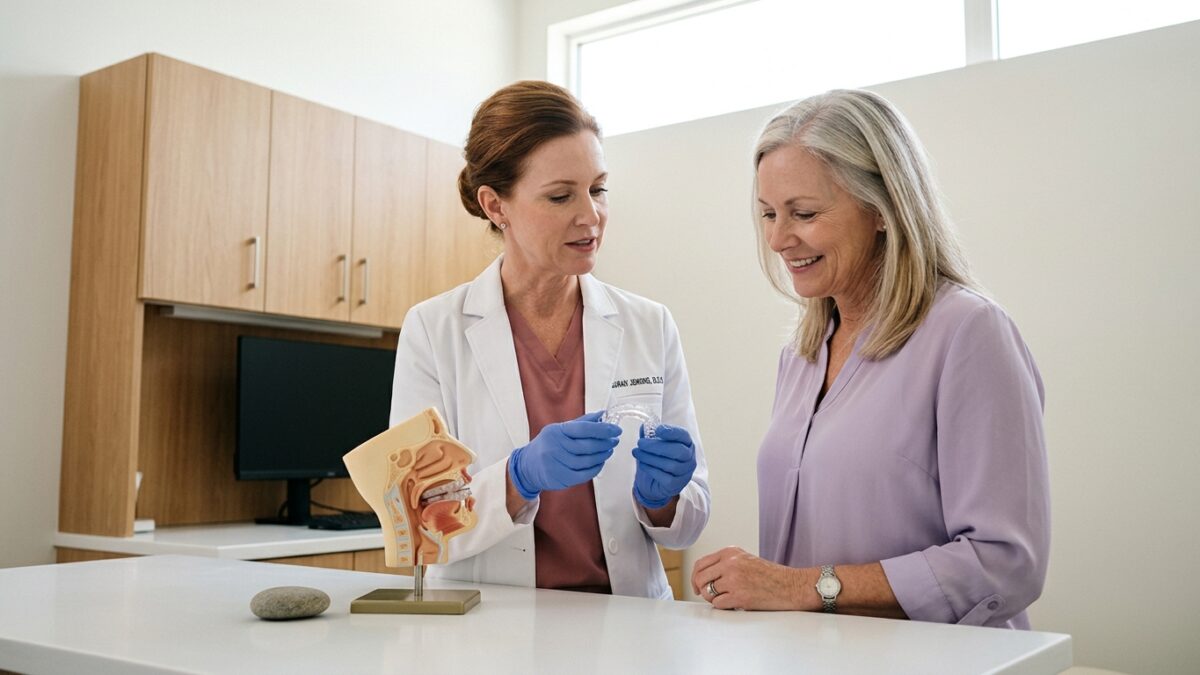
Last updated: November 22, 2026
Looking for airway health dentistry in Cleveland? Bajars Dental is in San Diego, near Coronado; we do not have a Cleveland location. Our snore management service offers a dentist-prescribed, custom-made mouthpiece intended to reduce snoring during sleep. Snoring can also be a sign of obstructive sleep apnea (OSA), which may require a medical sleep evaluation before you choose treatment.
When Does Snoring Need a Sleep Evaluation?
If someone notices pauses in your breathing or gasping during sleep, or you feel sleepy during the day, talk with a clinician about a sleep evaluation before choosing a treatment to quiet snoring. Primary snoring means snoring without OSA.
When Is a Mouthpiece an Option for Snoring or OSA?
The 2015 American Academy of Sleep Medicine and American Academy of Dental Sleep Medicine guideline recommends an oral appliance for adults who request treatment for primary snoring, after a sleep physician determines they do not have OSA. For adults with OSA, it recommends considering an oral appliance when they cannot tolerate continuous positive airway pressure (CPAP) or prefer an alternative. When an appliance is prescribed for OSA, the guideline favors a custom, adjustable device fitted by a qualified dentist over a noncustom device.
These options address different causes and needs. Cleveland Clinic’s guide to stopping snoring describes measures such as side sleeping and weight management if you are overweight; weight loss may reduce snoring but is not a guaranteed cure for snoring or OSA. An article on Mayo Clinic’s site about snoring home remedies suggests raising the head of the bed and getting enough sleep. Quitting smoking may also reduce snoring. Avoid alcohol close to bedtime; if you take sedatives, tell your prescriber about your snoring and discuss the medicines rather than stopping them on your own.
If allergies or chronic congestion make it hard to breathe through your nose, ask a clinician whether treatment such as an antihistamine or steroid nasal spray is appropriate. Nasal strips or nasal dilators may improve nasal airflow and ease snoring, but they do not treat OSA. Persistent congestion or a possible structural blockage, such as a deviated septum, calls for medical assessment because it may need different treatment.
| Option | When it may help | What to consider |
|---|---|---|
| Custom oral appliance | Primary snoring in adults; an option for OSA when CPAP is not tolerated or an alternative is preferred | Requires fitting, adjustment and dental follow-up; OSA treatment also needs follow-up sleep testing. |
| CPAP | OSA and snoring associated with OSA | Uses a mask and machine during sleep; when used, it generally reduces OSA breathing events more than an oral appliance. |
| Self-care | Snoring that may respond to changes in sleep position, habits or nasal airflow | May reduce snoring but cannot establish whether OSA is present or adequately treated. |
| Other medical or surgical treatment | Selected patients whose snoring or OSA has a cause suited to another treatment | A medical specialist can assess the options. Mayo Clinic’s discussion of treatment options for loud snoring describes upper-airway procedures. |
What Can a Dentist Assess Before Fitting a Mouthpiece?
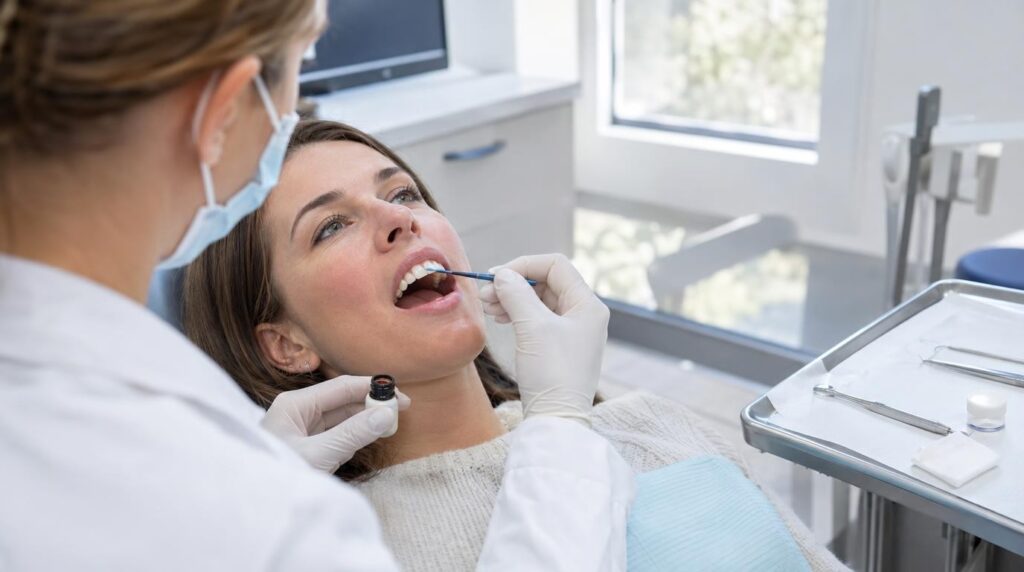
For an oral appliance, a dentist examines the teeth, gums, jaw and bite to see whether a device can fit and be adjusted comfortably. Untreated cavities or active gum disease may need care first. Loose teeth, too few stable teeth to hold the device, significant jaw-joint pain or limited jaw movement may make a mandibular advancement appliance unsuitable. The decision depends on your individual dental assessment rather than any one finding alone. Teeth grinding or the appearance of the tongue may be worth discussing, but neither diagnoses OSA. A sleep evaluation, rather than an oral examination alone, determines whether snoring is accompanied by OSA.
A report on the American Dental Association’s site about its sleep and airway summit describes calls for better communication between dentists and physicians and clearer roles in sleep and airway care.
What if a child snores or breathes through the mouth at night?
Regular snoring, witnessed breathing pauses or gasping, and daytime learning or behavior concerns in a child warrant evaluation by a pediatrician or family doctor. If your child persistently breathes through the mouth at night, discuss that with their pediatrician or family doctor even without those other signs; they can assess possible nasal obstruction and other causes. Mouth breathing alone does not diagnose OSA. A dental screening questionnaire can identify possible sleep-disordered breathing but cannot diagnose OSA. A 2026 systematic review of 12 studies involving 3,737 children and adolescents in orthodontic settings found that rates of high risk on screening questionnaires ranged from 1.2% to 69% across studies. These were screening results, not rates of confirmed OSA in all children. A 2026 scoping review of 34 pediatric dental-setting studies found that only one study documented referral outcomes. The adult oral-appliance recommendations above do not establish treatment for children.
What Is Oral Appliance Therapy for Snoring?
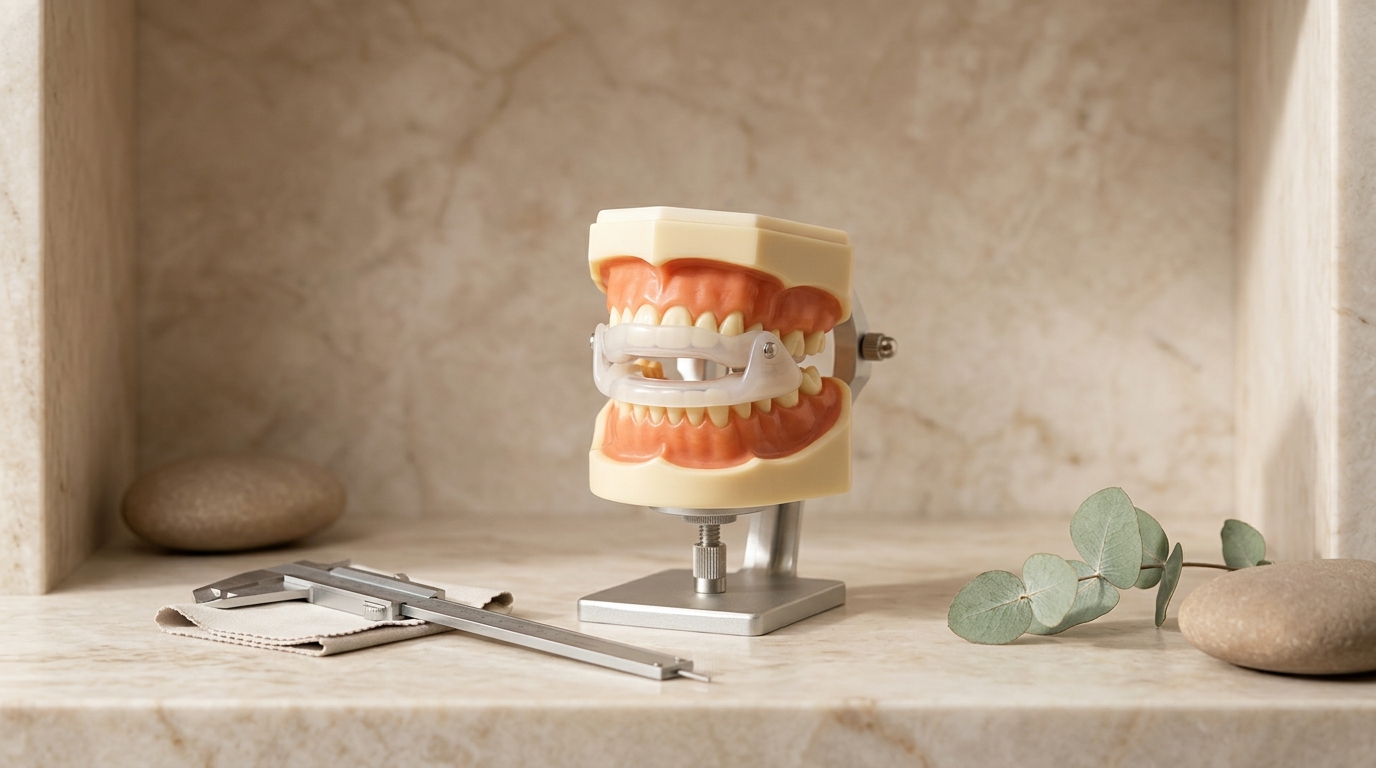
Oral appliance therapy uses a custom-fitted dental device, sometimes called a dental snore reducer, worn during sleep. It can help adults with primary snoring and can be an option for adults with OSA. For a mandibular advancement device, a dentist fits it over your teeth and adjusts it to position your lower jaw forward. This can create more space behind the tongue and reduce the tissue vibration that produces snoring. Results and comfort vary.
The American Dental Association’s policy on sleep-related breathing disorders says custom-made, adjustable oral appliances can improve these disorders in adults compared with no therapy or a placebo device.
How Does an Oral Appliance Support Airway Patency?
Moving the lower jaw forward can help keep the space behind the tongue more open while you sleep. The appliance works mechanically, without a mask or machine. It generally helps only while you wear it: it is not a permanent correction, and continued nightly use and adjustments may be needed. If you have OSA, quieter snoring alone cannot show whether your breathing events are controlled.
What Should Patients Expect From This Treatment?
Treatment proceeds in stages:
- Establish whether snoring is primary snoring or accompanies OSA. A sleep physician diagnoses OSA and helps determine the appropriate treatment.
- Have a dental examination and impressions or digital scans for a custom appliance. The dentist fits and adjusts the device for nightly use.
- Return for adjustments and dental visits to check comfort, fit, teeth and bite. According to Mayo Clinic’s snoring diagnosis and treatment page, visits may be needed at least once every six months during the first year and at least annually afterward; your dentist will recommend a schedule for you. If the appliance treats OSA, follow-up sleep testing is needed to check its effectiveness; ask your sleep physician to arrange it.
Because this is a non-surgical device, there is no surgical healing period. Getting used to sleeping with it can take time, and you may need adjustments for comfort; the adjustment period varies.
If you also grind your teeth, our guide to sleep apnea and teeth grinding covers their effects on dental health. Grinding by itself does not diagnose OSA.
What are the risks of an oral appliance?
Early effects can include excess saliva, dry mouth, tooth discomfort, jaw pain and facial discomfort. Adjustments may help with discomfort. Changes in how your teeth meet can develop gradually with continued use, which is why dental follow-up matters. How often these effects occur varies with the device and length of use; no single dependable percentage predicts each effect for an individual patient. Tell your dentist about persistent pain or a changing bite.
What Should You Discuss With Your San Diego Dentist About Snoring?
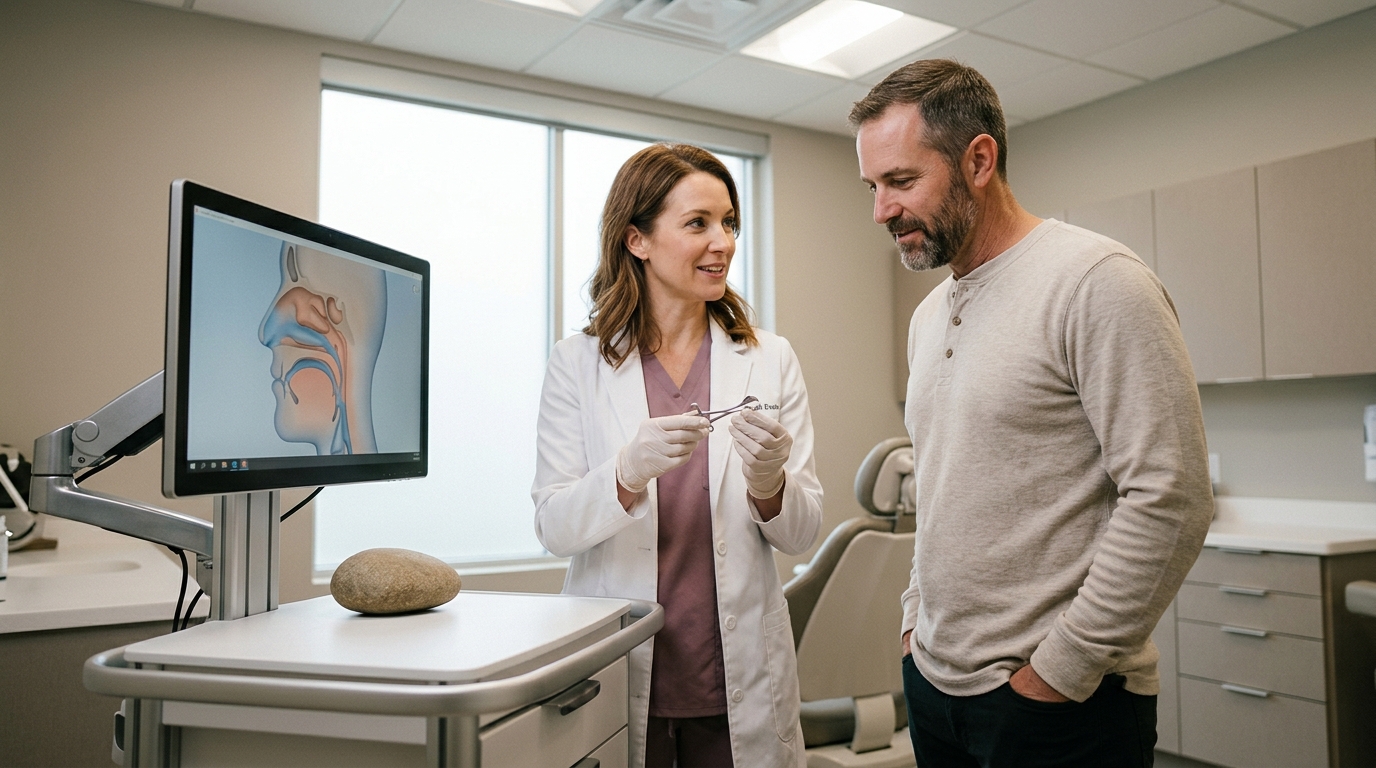
Tell us whether your snoring changes with sleep position or nasal congestion, and share any difficulty you have using CPAP. If you have OSA, discuss a possible change in treatment with your sleep physician before changing your prescribed therapy.
Which Questions Help You Evaluate Treatment Options?
Ask whether the proposed appliance is custom-made and adjustable, how its fit will be checked, and how changes to your bite will be monitored. If you have OSA, ask your sleep physician who will arrange follow-up testing and how to share the results with your dentist.
How Can You Prepare for Your Appointment?
Before your appointment, note when you snore, whether someone has observed breathing pauses, and how rested you feel on waking. Bring your medication list, relevant medical history, any sleep-study results and information about CPAP use.
Schedule a snore management consultation with our team at Bajars Dental in San Diego to discuss whether a custom mouthpiece may help you.
Frequently Asked Questions
When is a breathing problem an emergency rather than a routine sleep concern?
Call 911 if someone is unresponsive, stops breathing or struggles to breathe, or has blue or gray lips. Breathing pauses or gasping noticed during sleep warrant medical assessment even if the person seems well after waking.
What if my mouthpiece starts to hurt my jaw?
Contact the prescribing dentist to discuss the fit and adjustment, especially if your bite changes or you cannot wear the appliance comfortably. Do not force it into position or change its setting without guidance.
If my snoring gets quieter, can I stop using CPAP?
No. Continue using prescribed CPAP unless your sleep physician confirms that an alternative controls your OSA and changes your treatment plan.
Can a home sleep apnea test replace an overnight lab study?
Sometimes. A sleep clinician may recommend a home sleep apnea test for an adult with uncomplicated suspected OSA. An in-lab study may be needed if a home result is negative or inconclusive despite ongoing concern, or if other medical conditions affect which test is appropriate.
Can I use an oral appliance if I have crowns, bridges or implants?
Possibly. Crowns, bridges and implants do not automatically rule out a mouthpiece. A dentist needs to evaluate their stability, your gums, your remaining teeth and your bite to decide whether an appliance can fit safely.
What if my snoring returns after a mouthpiece helped?
Contact the prescribing dentist to discuss a fit and bite check rather than advancing the appliance yourself. If you use it for OSA, let your sleep physician know too; another sleep test may be needed to check whether treatment remains effective.
Sources
- American Academy of Sleep Medicine and American Academy of Dental Sleep Medicine, Clinical Practice Guideline for the Treatment of Obstructive Sleep Apnea and Snoring with Oral Appliance Therapy (2015).
- Mayo Clinic, Snoring: Diagnosis and treatment.
- Cleveland Clinic, How To Stop Snoring for Peaceful Sleep.
This information is general and is not medical advice. Talk to a licensed clinician about your own situation before making a treatment decision.
About the doctors at Bajars Dental
Dr. Sandris Bajars – General dentistry, endodontics and orthodontics; over 15 years of experience.
Dr. Tania Bajars – General dentistry.