Ceramic Crowns for Teeth: Materials, Treatment, and Care
October 10, 2026
Invisalign Attachments: Why They’re Used and What to Expect
October 22, 2026
Last updated: October 19, 2026
A root canal removes damaged or infected pulp and cleans and seals the inside of the tooth; a crown may then protect the restored tooth. At Bajars Dental, our root canal treatment includes a crown as a protective next step, although the restoration recommended for an individual tooth depends on its condition.
What Are a Root Canal and a Crown, and Do You Need Both?
A root canal treats the inside of a damaged or infected tooth; a crown covers the visible tooth to help protect it during chewing. The procedures serve different purposes, so a crown cannot replace treatment for infected pulp. Whether a particular tooth needs a crown after root canal therapy depends on its location, remaining structure, cracks, and chewing forces.
Does Every Tooth Need a Crown After a Root Canal?
No. Some teeth can be restored with a filling, while teeth weakened by decay, large fillings, or cracks may benefit from a crown. The American Dental Association’s root canal guidance advises placing a permanent filling or crown at the earliest opportunity after a temporary filling.
Can a Crown Alone Treat an Infected Tooth?
No. A crown covers the outside of a tooth; it does not remove infected pulp from the canals. Root canal therapy addresses the pulp before the tooth receives its final restoration. For more detail about the distinction, see our guide to endodontic treatment before a root canal.
What Happens During the Root Canal Before Crown Placement?
How Is the Tooth Isolated, Cleaned, Filled, and Sealed?
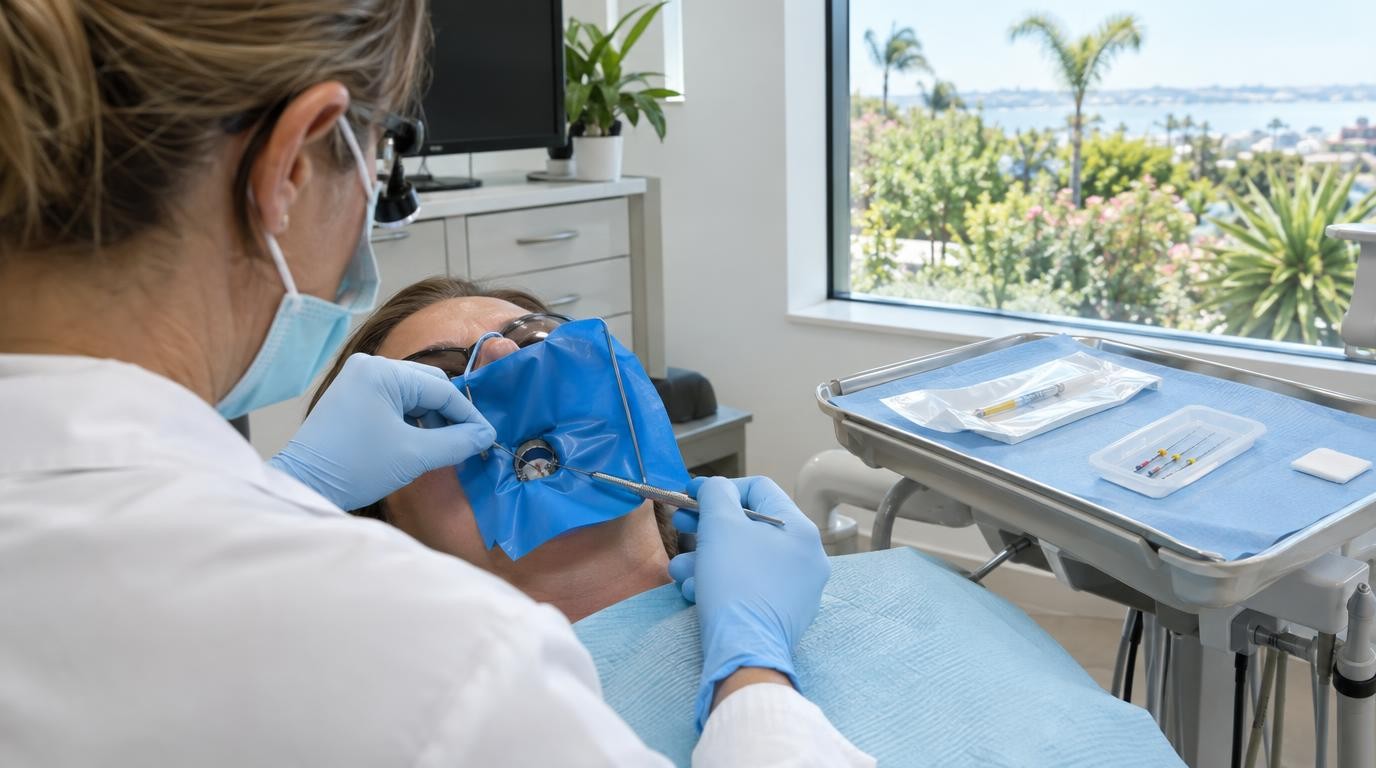
After X-rays, the dentist numbs and isolates the tooth, removes diseased pulp, cleans and fills the canals, and seals the opening. The Mayo Clinic’s description of root canal treatment explains these steps:
- Before treatment, dental X-rays help assess damage to the tooth and surrounding bone. The dentist then numbs the area, places a dental dam to keep saliva away, and makes an opening to reach the pulp.
- Small instruments remove the diseased pulp. The canals are cleaned and may be reshaped so they can be filled.
- After cleaning, the canals are filled and sealed. The opening in the tooth receives a temporary or definitive restoration.
How Many Hours Will a Root Canal Take?
Cleveland Clinic says most root canals take about 60 to 90 minutes, while some require more than one visit. Appointment length varies with the tooth and the complexity of its canals. At Bajars Dental, canal cleaning usually takes relatively little time.
When Is the Crown Placed After a Root Canal?
A crown is placed after the canals have been treated and the tooth is ready for its definitive restoration. A temporary seal may protect the tooth in the meantime, with crown preparation and placement scheduled separately. Crown timing depends on the tooth, symptoms, and how the restoration is made; a fixed healing wait is not required for every patient.
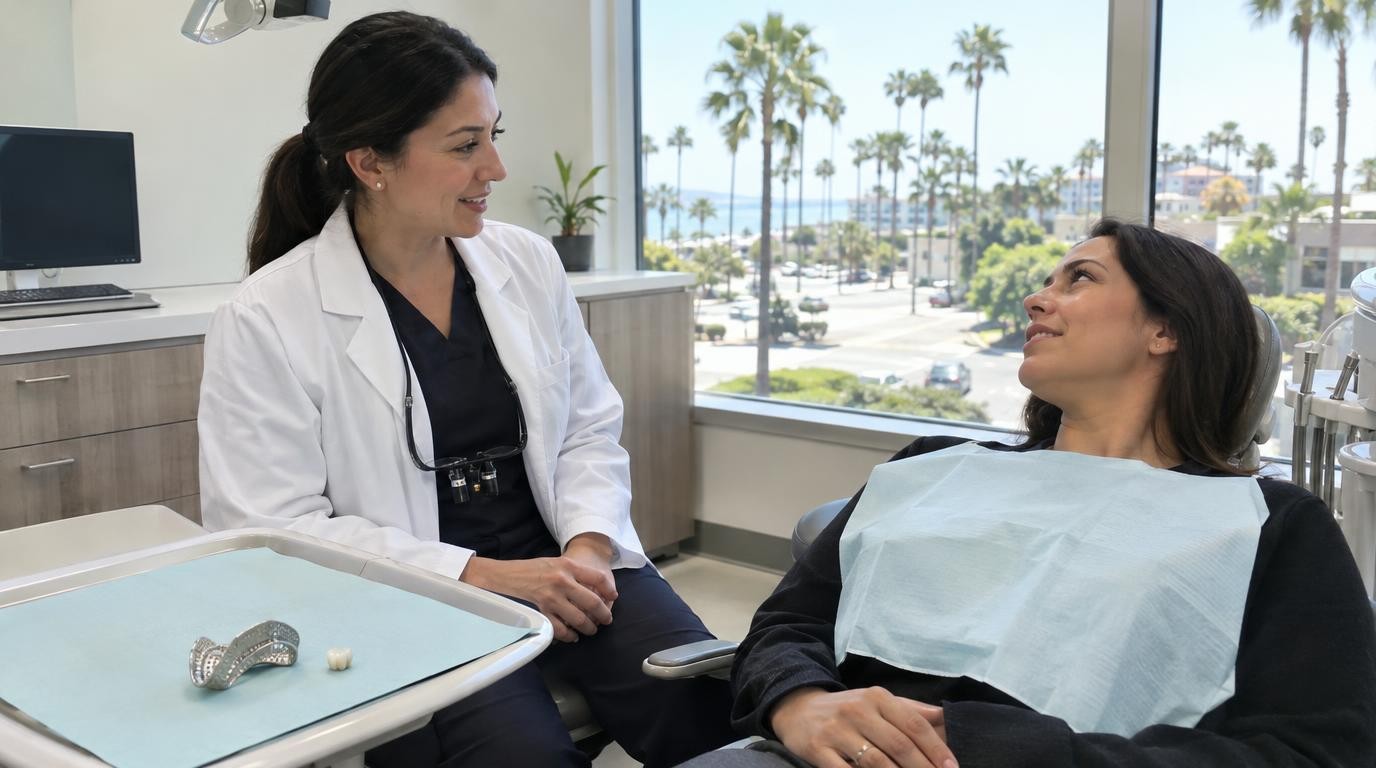
Will You Need a Temporary Filling or Crown Between Visits?
You may. A temporary filling seals the access opening and helps keep food and saliva out before the permanent restoration is placed. Depending on the tooth and treatment plan, a temporary crown may also be used while the final crown is made. Keep the follow-up appointment so a temporary restoration does not become the long-term plan.
Can the Root Canal and Crown Be Done at the Same Appointment?
Usually not. Cleveland Clinic says you will likely have two more appointments after root canal treatment: one to prepare the tooth for its crown and one to place the crown. The schedule can vary with the tooth and how the crown is made.
What Does a Crown Look Like After a Root Canal?
A finished crown covers the visible part of the treated tooth and is shaped to fit your bite. Its appearance depends on the material and color selected for the restoration. At placement, the dentist checks the crown’s fit and your bite. Porcelain and porcelain-fused-to-metal crowns can be tinted to match the color of your other teeth.
Bajars Dental offers metal-free crowns. Our guide to ceramic crowns and their care explains one option, while this educational guide to dental crowns offers broader background. The appropriate material depends on the tooth being restored.
How Do You Care for Your Tooth Between Root Canal Treatment and a Crown?
Follow the instructions for any temporary filling or crown, and avoid chewing until numbness wears off. MedlinePlus root canal guidance advises avoiding rough chewing in the area until the tooth is permanently filled or crowned. Continue brushing and cleaning between your teeth.
Can You Get a Cavity Under a Crown With a Root Canal?
Yes. Root canal therapy removes pulp, but the remaining tooth can still decay under a crown, particularly near a crown edge. A treated tooth may not give the same sensitivity warning as a tooth with living pulp. Regular dental examinations can check for decay and problems with the crown.
MedlinePlus guidance on dental crowns recommends brushing twice a day and flossing once a day to help prevent cavities. Our guide to crown longevity and repair explains other reasons a crown may need attention.
Can a Root Canal Be Done Through an Existing Crown?
Sometimes a dentist can treat the canals through a sound existing crown by making an access opening and sealing that opening afterward. The existing crown cannot always be kept. Decay beneath its edges, leakage, damage, or inadequate access may make replacement the better way to restore and protect the tooth.
What Are the Risks and When Might a Root Canal and Crown Not Be Suitable?
Temporary soreness can follow a root canal, and infection can sometimes persist or require further treatment. A tooth awaiting its final restoration also needs protection from fracture. Once placed, a crown can come loose or fall off, chip, or crack. If an extensive crack or too little sound tooth structure prevents a dependable restoration, a root canal and crown may not be suitable. Examination and imaging guide that decision.
Most root canals are successful and can last for many years—often a lifetime—according to Cleveland Clinic. Discuss the tooth’s restorable structure, symptoms, and treatment risks with your own clinician before deciding how to proceed.
Which Symptoms After Treatment Should Prompt a Call to the Dentist?
Call the dental office if pain or pressure lasts more than a few days, or sooner for increasing or throbbing pain, swelling, or a temporary or permanent restoration that comes loose. Seek urgent medical care for fever with spreading facial swelling or difficulty swallowing or breathing.
What Are the Alternatives to a Root Canal and Crown?
Options include a filling or crown without a root canal when the pulp is healthy, a pulpotomy for selected teeth, or extraction with or without replacement. Cleveland Clinic’s pulpotomy guidance notes that this procedure may also be an alternative for adults. We assess the pulp and remaining tooth structure before recommending a plan:
| Option | When it may fit | What it does |
|---|---|---|
| Filling or crown without a root canal | The pulp is healthy and the tooth can be repaired. | Repairs or covers the tooth but does not treat infected pulp. |
| Pulpotomy | The dentist determines that the condition of the pulp and tooth makes it suitable, including in some adults. | Removes affected pulp from the tooth’s crown while preserving pulp in the roots when appropriate. |
| Root canal with a filling or crown | The pulp is damaged or infected and the tooth can be restored. | Removes diseased pulp and seals the canals; the final restoration protects the tooth. |
| Extraction, with replacement when appropriate | The tooth cannot be saved or restored. | Removes the tooth. An implant, bridge or removable partial denture may replace it. |
Frequently Asked Questions
Will a root canal hurt if I also need a crown?
A root canal usually causes little or no pain during treatment because the dentist numbs the area. You may feel pressure, and mild soreness can follow. Cleveland Clinic compares the procedure to getting a filling with modern anesthesia. Tell your dentist if anything hurts during treatment.
Will I need a post to hold my crown after a root canal?
Not necessarily. A post may be needed if much of the tooth is missing and the crown needs additional support. The American Dental Association notes that a metal or plastic post may be placed to support a crown when needed.
How long does it take to recover from a root canal before getting a crown?
Most people recover from root canal treatment in less than a week, according to Cleveland Clinic. Some sensitivity can linger for a few days, but pain or pressure lasting more than a few days warrants a call to your dentist rather than waiting for the crown visit. Recovery time does not set a universal crown-placement date.
Can I go back to work the same day as a root canal?
Most people can return to their normal routine the same day, according to MedlinePlus. Your own plans may depend on how you feel and whether you receive medication that makes you drowsy. Until the tooth has its permanent filling or crown, avoid rough chewing in that area.
Do I need antibiotics after a root canal before the crown is placed?
Not everyone needs antibiotics after a root canal. Your dentist may prescribe them if the infection has spread, according to the American Dental Association. If prescribed, take them as directed and contact your dentist if you have trouble taking them.
Should I wear a night guard if I grind my teeth after getting a crown?
Tell us if you grind or clench your teeth. A night guard may help protect your crown while you sleep; we can assess whether one is appropriate for you.
Can a root canal be redone if a crowned tooth develops problems later?
Sometimes a tooth can be treated again with another root canal if the original treatment does not resolve the problem. Cleveland Clinic also identifies extraction, followed by an implant or bridge, as a possible option when damage is too severe.
When Should You Ask a San Diego Dentist About a Root Canal and a Crown?
Persistent tooth pain or sensitivity, a cracked tooth, or gum swelling can warrant an examination for pulp damage or infection. Pain when chewing, a darkened or loose tooth, or a pimple on the gums that oozes pus can also be signs of infection.
If you are considering a root canal and a crown, contact Bajars Dental in San Diego, California, for a consultation. Our team can examine the tooth, explain the recommended restoration, and help you understand which follow-up appointments to plan.
This information is general and is not medical advice. Talk to a licensed clinician about your own situation before making a treatment decision.