
Dental Crowns vs Veneers: Choose Based on Tooth Health
October 25, 2026
Orthodontic Braces Before and After: What to Expect Long-Term
October 31, 2026
Last updated: October 28, 2026
Post root canal recovery usually involves mild soreness that improves over the next few days. If you are planning treatment, learn about root canal treatment at Bajars Dental.
How long does post root canal recovery take?
Most people recover from root canal treatment in less than a week, according to Cleveland Clinic. Mild sensitivity may linger while the tissues around the tooth settle. Feeling better does not mean the tooth is fully protected: a temporary filling may still need to be replaced with a final filling or crown.
What should you expect just after treatment?
Your mouth may remain numb after you leave the dental office. As the anesthetic wears off, the treated tooth or nearby area may feel tender, especially when you bite. Follow the instructions you received for the treated tooth and any temporary restoration.
When should soreness start to improve?
The American Dental Association says the tooth and surrounding area may feel sensitive for a few days. The important pattern is improvement, not a perfectly comfortable tooth immediately after treatment. Contact your dentist if pain or pressure lasts more than a few days or worsens instead of easing.
What is root canal treatment of teeth, and why can the tooth feel sore afterward?
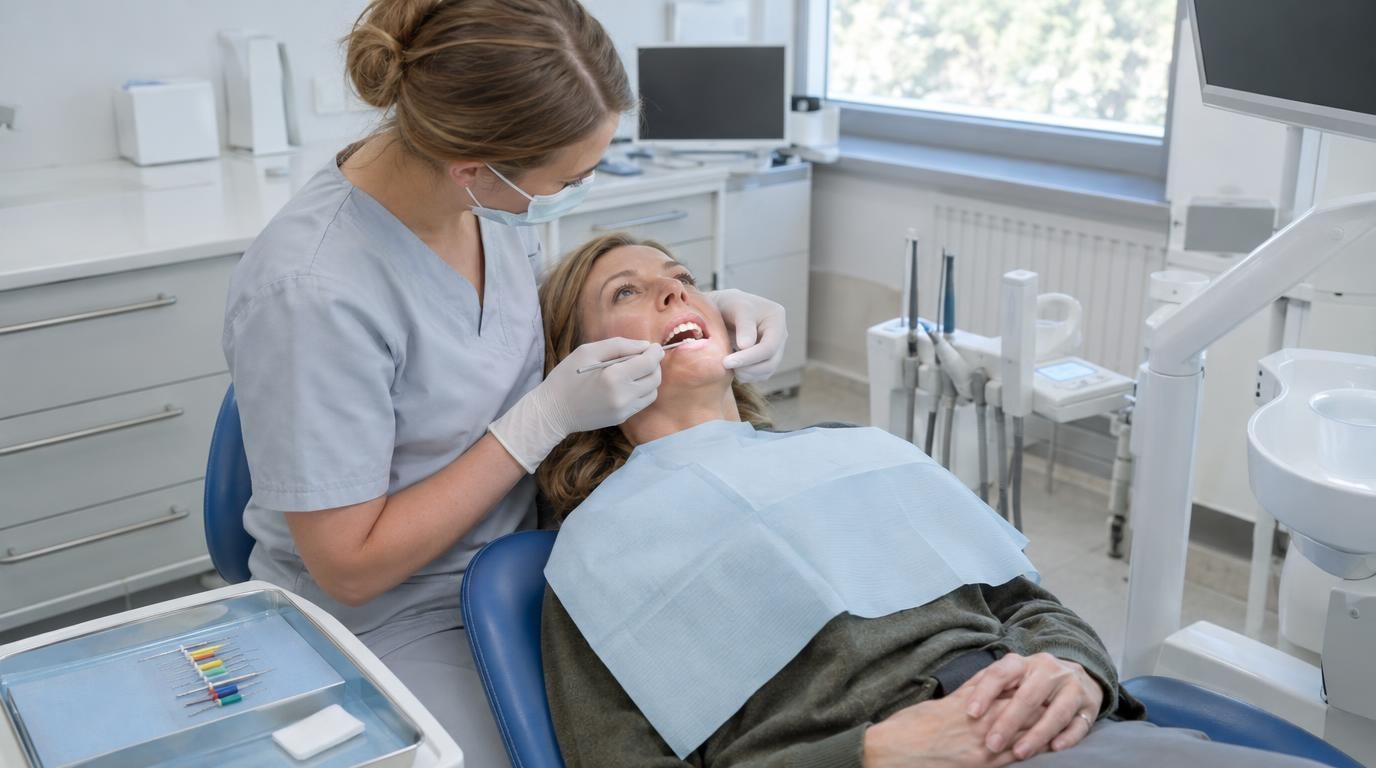
Root canal therapy removes damaged or infected pulp to help save the natural tooth. Treatment and restoration follow these steps:
- The dentist numbs the area and makes an opening in the tooth.
- The damaged or infected pulp is removed.
- The canals are cleaned, filled and sealed.
- At Bajars Dental, we use a crown afterward to strengthen the treated tooth.
Why can a tooth feel sensitive after its pulp is removed?
The pulp is inside the tooth, but tissues around the root can also be irritated, particularly if the tooth was painful or inflamed before treatment. That is why biting may still feel uncomfortable even after the affected pulp has been removed.
When can you eat and resume everyday activities after a root canal?
Wait until the numbness wears off before chewing so you do not accidentally bite your cheek or tongue. Many people can resume their usual routine promptly, but discomfort, sedation and individual instructions can change the plan.

When can you eat after the numbness wears off?
Once you can feel your mouth normally, choose soft foods if chewing is uncomfortable. Mayo Clinic advises avoiding chewing on the treated tooth until it has been permanently treated and restored.
When can you return to work or exercise?
MedlinePlus says most people can return to their normal routine the same day. Your own return depends on how you feel and whether you received medication that makes you drowsy. Follow your treating dentist’s activity instructions rather than treating a general recovery estimate as a fixed schedule.
How can you manage soreness without taking more medication than you need?
Mild, improving soreness does not necessarily require pain medication. MedlinePlus notes that an over-the-counter anti-inflammatory medicine such as ibuprofen can help relieve discomfort. Use a pain reliever only if it is safe for you, and follow your treating dentist’s instructions.
Is it normal to not need pain medication after a root canal?
Yes. Some people have little discomfort after treatment and do not need medication. If you do need an over-the-counter pain reliever, ask your treating dentist which option is suitable, particularly if you cannot take anti-inflammatory medicines such as ibuprofen. Persistent or increasing pain needs assessment rather than repeated attempts to manage it on your own.
How do you protect the treated tooth until it is fully restored?
Keep the treated tooth clean and attend the appointment for its final restoration. A permanent filling or crown protects the tooth from further damage.
What should I do after having a root canal and a crown?
Once your final crown is in place, brush and clean around the tooth as you would around your other teeth, and follow any specific instructions about your bite or the crown. The crown protects the treated tooth, but ongoing oral hygiene still matters. For more on the treatment sequence, see what happens during a root canal and crown treatment.
What if you have a temporary filling or crown?
A temporary filling protects the tooth from food and saliva while it awaits permanent restoration. If a temporary filling or crown comes loose, contact your dentist so the tooth can be assessed and protected.
Which symptoms are expected, and when should you call the dentist?
Mild tooth or nearby-area tenderness that steadily improves can be expected after a root canal. Call your dentist if pain worsens, stops improving or is difficult to locate, or if swelling or a boil appears on the gums. A lost temporary restoration also warrants a call because the treated tooth may need protection.
Is referred pain normal after a root canal?
Discomfort can sometimes seem to come from a nearby tooth or the jaw rather than the treated tooth. Its location alone cannot establish the cause. If that pain persists, intensifies or is hard to pinpoint, a dental examination can identify what needs attention.
What if pain, gum swelling, or a boil on the gums appears?
Cleveland Clinic identifies pain, swelling and a boil on the gums as reasons for dental evaluation. Contact your dentist promptly for a new or worsening symptom, particularly if pain becomes throbbing. Seek urgent medical care if swelling spreads rapidly or you have trouble breathing or swallowing.
What are the risks of root canal therapy, and who might need a different plan?
Root canal treatment can leave temporary tenderness, and infection may persist or recur after treatment. Worsening or throbbing pain calls for prompt dental reassessment, though pain alone does not prove infection. A tooth that is not adequately protected may also be damaged. A dentist must assess whether a severely damaged or cracked tooth can be restored; if it cannot be saved, extraction may be the better option.
When might a tooth not be suitable for a crown after treatment?
A crown needs enough sound tooth structure to provide dependable support. A severe crack or extensive damage may make that impossible, even if the canals can be treated. An examination helps determine whether the tooth can be predictably restored. You can also read about symptoms and treatment options for a damaged tooth nerve.
Who should ask about alternatives to common pain relievers?
If you cannot take nonsteroidal anti-inflammatory drugs, such as ibuprofen, ask about a suitable pain plan. That restriction does not itself rule out root canal treatment. Discuss your medical history, medicines, the tooth’s restorability and the risks of your available options with your own clinician before deciding on treatment.
How does recovery after saving the tooth compare with extraction?
Most people recover from root canal treatment in less than a week. Extraction requires care of the removal site; if you decide to replace the tooth, that adds treatment. Because extraction recovery and any replacement follow different schedules, neither option is always quicker. We also assess whether the damaged or infected tooth can be treated and restored predictably.
The options differ in what happens to the tooth and what care follows:
| Consideration | Root canal treatment | Extraction |
|---|---|---|
| What happens to the tooth | The natural tooth remains after the affected pulp is removed. | The tooth is removed. |
| What may follow | A permanent filling or crown protects the tooth; at Bajars Dental, we use a crown to strengthen it. | The tooth may be left unreplaced or replaced with an implant, bridge or removable partial denture. |
| Recovery | The tooth or nearby area may feel sensitive for a few days; most people recover in less than a week. | The extraction site needs its own aftercare; recovery varies, and replacing the tooth involves further treatment if you choose it. |
Frequently Asked Questions
Will I need antibiotics after a root canal?
Not necessarily. Your dentist may prescribe antibiotics if the infection has spread, according to the American Dental Association. If you receive a prescription, take it as directed and contact your dentist if you have problems taking it. Do not assume antibiotics are part of every root canal recovery.
How many visits does a root canal usually take?
A root canal usually takes one or two visits, although some teeth require more, according to Mayo Clinic. Restoring the tooth may involve further appointments; Cleveland Clinic says a crown will likely involve two more visits, one to prepare it and another to place it. Ask your dentist which steps are complete and when your permanent filling or crown will be placed.
Why might I need a post after a root canal?
A post may be needed when substantial tooth structure is missing and the crown needs more support. Mayo Clinic notes that a metal post can help keep a crown in place in this situation. Not every treated tooth needs one; your dentist will assess the remaining tooth and explain the restoration plan.
Can I get a filling instead of a crown after a root canal?
Sometimes a permanent filling is an option, depending on how much healthy tooth remains. The American Dental Association says a temporary filling is replaced with a regular filling or crown to protect the tooth. At Bajars Dental, we use a crown to strengthen the treated tooth; ask us what your tooth needs.
How soon should I get a permanent crown or filling after a root canal?
Arrange the final restoration at the earliest opportunity rather than waiting for soreness to disappear. The American Dental Association says a temporary filling protects the tooth until a permanent filling or crown can be placed. Your dentist can set the appropriate appointment based on your treatment plan.
Can a root canal-treated tooth last a lifetime?
Yes, it can, but a lifetime is not guaranteed. Mayo Clinic says a restored tooth could last a lifetime with good dental and oral care. Follow through with the planned restoration and keep caring for the tooth; its long-term outlook depends on its condition and ongoing care.
If you are recovering from treatment or wondering whether a painful tooth can be saved, contact Bajars Dental in San Diego, California, for a consultation. Our team can examine the tooth, review your symptoms and explain the appropriate next step without assuming every tooth needs the same plan.
This information is general and is not medical advice. Talk to a licensed clinician about your own situation before making a treatment decision.