Clear Aligners: How AI Is Transforming Treatment
August 20, 2026
Veterans Dental Clinic Guide: Quality Care Options
August 26, 2026
Last updated: November 5, 2026
At Bajars Dental in San Diego, we care for children of all ages. Our children’s dental services range from checkups and cleanings to restorative treatment, including root canals when appropriate. We can help you understand whether a general dentist who treats children or a pediatric dentist is the right fit for your child.
What Makes a Pediatric Dental Specialist Different from a General Dentist?
Our practice includes both general and pediatric dentists. When scheduling, ask which dentist will see your child and whether that dentist has pediatric specialty training. The American Dental Association explains that pediatric dentists complete additional training after dental school in childhood growth and development, child psychology, care for anxious children and care for patients with special needs. General dentists also receive training in children’s dental care and can treat many children.
Here is how the two options differ when you choose dental care for your child:
| Consideration | General dentist who treats children | Pediatric dentist |
|---|---|---|
| Training | Dental school includes children’s dental care. | Completes additional specialty training after dental school. |
| Patients | May treat children and adults. | Usually treats infants through adolescents; some also treat adults with special needs. |
| When the option may fit | Can provide care for many children and refer a child who needs more specialized care. | May be helpful when a child needs specialized care or feels more comfortable in a child-focused setting. |
What Specialized Training Does a Pediatric Dentist Receive?
Pediatric residency training addresses developing teeth and jaws, children’s behavior and dental anxiety, and techniques for treating young patients. It also includes training in sedation techniques, but specialist training does not mean every child needs sedation or that every office offers it. Both pediatric and general dentists can assess a child’s dental development and refer for further care when needed.
How Does a Pediatric Dental Office Environment Support Young Patients?
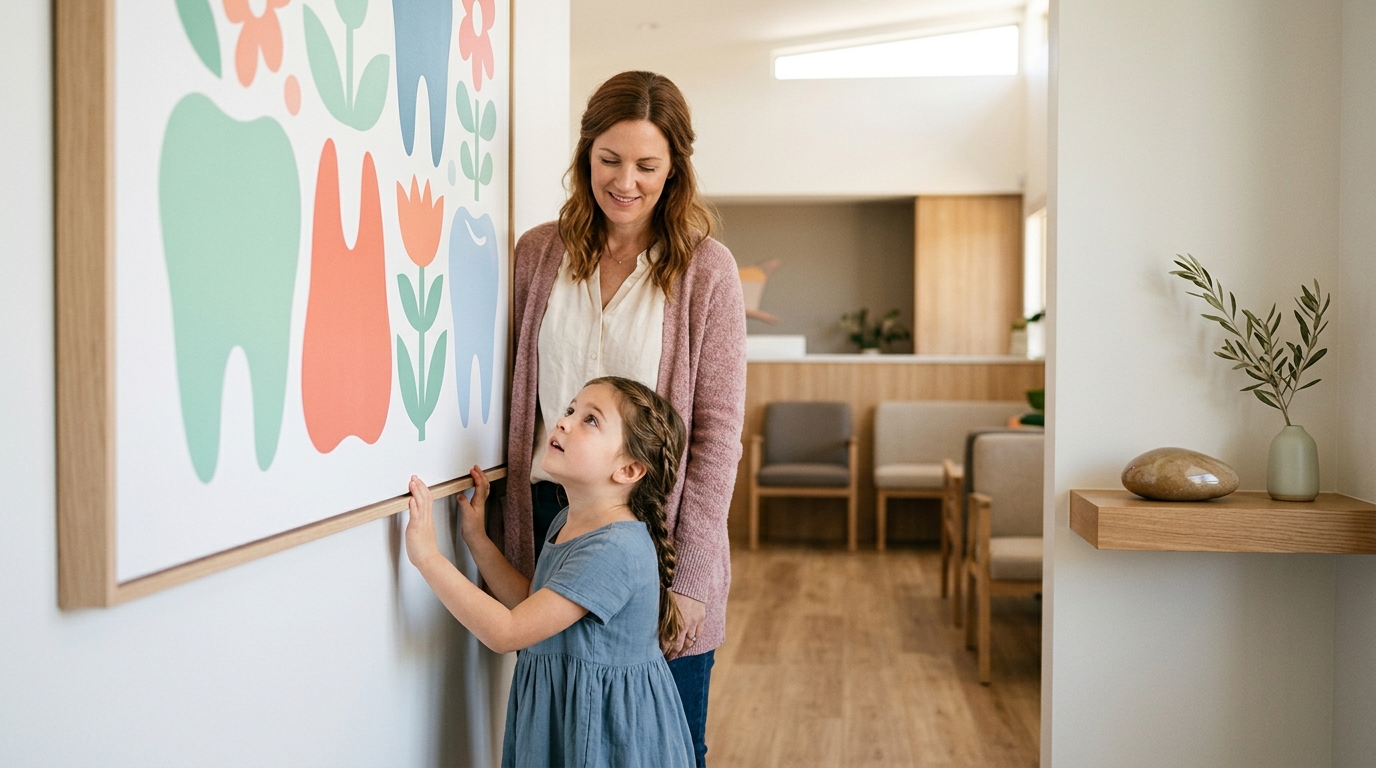
Some pediatric offices provide children’s books, toys or other age-appropriate activities. At Bajars Dental, our office is designed to welcome young patients. Décor alone cannot tell you how a team will respond to fear, so notice whether staff explain what they are doing in language your child understands and give your child time to respond.
How Can Families Compare Nearby and San Diego Children’s Dental Care?
If you live in Coronado, compare the treating dentist’s qualifications and approach to your child’s needs alongside travel for routine visits. An office’s location does not establish whether its dentists have pediatric specialty training.
When comparing offices near Coronado with our San Diego practice, ask which services your child may need, who provides them and how the team arranges follow-up care or a referral. Our general and pediatric dentists can also offer parallel parent-and-child appointments; ask our team about availability when scheduling.
How Do Follow-Up Visits and Individual Needs Affect Your Choice?
If treatment will require return visits, ask how often your child may need to come back and who will provide follow-up care. Before booking, tell the office about any medical, developmental or behavioral needs so the team can explain how it would plan your child’s visit.
What Community Trust Factors Should Families Consider When Choosing a Pediatric Dentist?
Community familiarity can be reassuring, but years in practice and promotional claims do not establish pediatric specialty credentials. Look for clear answers to your questions about the proposed care, including how the team would respond if your child became anxious.
What Should Parents Look for When Choosing a Kids Dental Specialist?
Ask how the dentist explains treatment to children, responds to anxiety and keeps parents informed. Look for patience, age-appropriate communication and a setting that welcomes children with different needs.
Describe any past difficulty with dental visits and ask what the dentist would do if your child needs a break or additional support. The answer can help you judge whether the team’s approach fits your child.
How Can Parents Evaluate a Pediatric Dentist’s Experience With Their Child’s Age Group?
Ask which dentist sees children at your child’s developmental stage and how that dentist handles visits or concerns common at that age. For a toddler, ask how the team approaches a first exam; for a teenager, ask how it evaluates bite and tooth development and when it might recommend an orthodontic consultation. Tell the dentist about your child’s previous experiences and ask how the team adapts a visit if your child becomes anxious.
What Role Do Patient Reviews Play in Selecting a Pediatric Dental Provider?
Patient reviews can describe staff demeanor, wait times and communication, but experiences vary from family to family. Read for specific, recent accounts rather than treating a rating or review count as proof of clinical quality or specialist training.
How Can a Child-Focused Practice Make Dental Visits Easier?
A child-focused practice may make visits easier by using age-appropriate explanations, allowing time for questions and adapting its approach to a child’s development. Children differ, so even a welcoming setting cannot guarantee a fear-free visit. Our team works to make children’s visits comfortable while providing the care they need.
Children’s dental visits can include an examination, cleaning and preventive care suited to the child’s age and needs. Fluoride treatments and sealants are options for preventing decay when appropriate. X-rays are taken when they are needed for diagnosis; a digital system or child-focused office does not, by itself, establish that an image uses less radiation than another appropriate technique.
How Does Specialized Equipment Support Pediatric Dental Treatments?
Smaller instruments or image sensors may be more comfortable for a young child when an office uses them. Equipment varies by practice, and the dentist should select an imaging method and exposure appropriate to the child and the diagnostic question. Sealants protect the chewing surfaces of suitable teeth; they do not replace brushing with fluoride toothpaste or other daily care.
What Can Ongoing Visits Reveal About a Child’s Dental Development?
During ongoing visits, the dentist can check how your child’s teeth and jaws are developing, look for signs of decay and discuss whether a bite concern needs further evaluation. Either a general dentist who treats children or a pediatric dentist can assess these changes and recommend care or a referral as needed. Identifying a concern early gives you time to discuss options; it does not guarantee that your child will avoid more extensive treatment.
How Can Families Arrange Children’s Dental Care in San Diego?
Our San Diego team sees children of different ages, including those coming from surrounding communities. When you contact us, tell us your child’s age, the reason for the visit and whether your child has had difficulty with dental appointments so we can discuss how to plan the visit.
Bring details about previous dental treatment and any questions about comfort or home care. You can discuss them with the treating dentist before deciding on a plan for further care.
When Should Children Start Dental Visits, and What Happens Next?
An early visit gives the dentist a chance to examine your child’s emerging teeth, answer your questions about home care and plan follow-up based on your child’s needs. Familiarity with the office may make later visits less intimidating, though some children will still feel anxious.
Cleveland Clinic’s guidance on pediatric dentists recommends a child’s first dental visit when the first tooth appears or by the first birthday. That visit can start an ongoing plan for dental care:
- At the first visit, the dentist examines the child’s mouth and discusses cleaning emerging teeth and preventing decay.
- At later visits, the dentist checks the teeth and gums, monitors development and recommends care according to the child’s needs.
- As appropriate teeth emerge, the dentist may recommend sealants to help protect their chewing surfaces.
For families in Coronado, San Diego and surrounding communities, Bajars Dental welcomes you to schedule a consultation about your child’s dental needs and our children’s dental services.
Frequently Asked Questions
Can I ask for a pediatric dentist for my child?
Yes. Tell us you would prefer a pediatric dentist when you schedule, and ask who is available to see your child. Let us know if there are particular needs you want to discuss before the visit.
Can a pediatric dentist treat parents too?
Pediatric dentists usually focus on children, although some treat adults with special needs. For your own dental appointment at our practice, ask to see one of our general dentists.
What health information should I share before my child’s visit?
Tell us about your child’s medications, allergies, medical conditions and previous dental treatment. These details help the treating dentist plan the exam and discuss appropriate care.
Can a parent stay with their child during an appointment?
Ask us when scheduling how parents can participate in the visit. We can explain how the treating dentist involves you and responds when a child needs extra reassurance.
What if my child has a toothache before their checkup?
Call us and describe the pain, when it started and whether your child has swelling or fever so we can discuss the next step. Facial swelling with fever needs urgent dental or medical evaluation. If your child has trouble breathing or swallowing, seek emergency medical care immediately.
How can I prepare a child who is nervous about a dental visit?
Use simple, neutral language to tell your child the dentist will look at their teeth, and invite them to share what worries them. Tell us about past difficult visits in advance so we can discuss how to help your child feel more comfortable.
What should I do if my child knocks out a tooth?
Call a dentist promptly. Do not put a knocked-out baby tooth back in its socket. If it is a permanent tooth, hold it by the crown rather than the root, keep it moist in milk and seek immediate dental care. If you are unsure which type of tooth it is, call us right away for guidance.
Related reading
- Kids Dental Specialist: What the CDC’s 2025 Study Reveals About Pediatric
- Cosmetic dentistry services in San Diego address aesthetic smile concerns
- Bajars & Bajars Dental provides comprehensive dental services in San Diego
This information is general and is not medical advice. Talk to a licensed clinician about your own situation before making a treatment decision.