San Diego Oral Surgeon: Cleveland Clinic Breakthrough
August 14, 2026
Clear Aligners: How AI Is Transforming Treatment
August 20, 2026
Last updated: August 17, 2026
Millions of adults unknowingly clench or grind their teeth during sleep, putting their smiles and jaw health at risk. Night guards offer a proven, non-invasive solution that protects teeth from damage, reduces jaw tension, and promotes restful sleep. Understanding how these custom-fitted appliances work is the first step toward relief from the hidden consequences of bruxism.
How Many Adults Actually Grind Their Teeth at Night?
Approximately 10 to 15 percent of adults experience bruxism, according to the American Dental Association and other authoritative dental sources. The majority of this grinding occurs during sleep, a condition known as sleep bruxism, making it particularly difficult for individuals to recognize the problem without a partner’s observation or a dental professional’s evaluation. This widespread prevalence represents a significant opportunity for dental practices to screen patients and provide education about available protection options.
What Are the Warning Signs of Teeth Grinding?
Common indicators of nighttime teeth grinding include waking with a sore jaw, tension in the facial muscles, frequent headaches upon arising, and increased tooth sensitivity. Dentists may also observe worn tooth enamel, flattened chewing surfaces, or small cracks during routine examinations. Patients in the greater San Diego area, including those in Lemon Grove, National City, and La Mesa, often first notice these symptoms after a dental visit reveals unexpected tooth wear patterns that do not match their age or dental history.
Why Do Many People Not Know They Have This Problem?
Because sleep bruxism occurs unconsciously, individuals rarely remember grinding their teeth upon waking. The gradual nature of the damage also means symptoms develop slowly over months or years before becoming noticeable. According to the Mayo Clinic, many people only discover they grind their teeth when a sleep partner complains about the sound, or when a dentist identifies the characteristic signs during a preventive care appointment. This awareness gap makes routine dental checkups particularly valuable for early detection and intervention.
What Problems Can Untreated Teeth Grinding Cause?
Untreated bruxism progressively damages teeth, jaw joints, and surrounding structures when left unaddressed. The sustained pressure from grinding generates forces far exceeding normal chewing, leading to cumulative trauma that affects both dental health and overall comfort. Addressing these consequences early with a protective night guard prevents more extensive and costly dental work down the road.
How Does Teeth Grinding Lead to Chipped or Cracked Teeth?
The repetitive clenching and grinding motion gradually weakens tooth structure, eventually causing chips, cracks, or fractures that may require restorative treatment. According to StatPearls research published by the National Center for Biotechnology Information, the excessive occlusal forces associated with bruxism particularly affect the back teeth, where biting pressure concentrates. Over time, these micro-cracks can propagate, and in severe cases, compromised teeth may require crowns or even extraction if the damage extends below the gumline.
What Is the Connection Between Grinding and TMJ Disorder?
Temporomandibular joint disorder develops when the constant strain from grinding overwhelms the jaw joints and surrounding muscles. The jaw muscles work overtime during sleep, causing inflammation in the temporomandibular joints that connect the jawbone to the skull. Patients experiencing jaw pain, clicking or popping sounds, and limited jaw opening should consider that untreated bruxism often contributes to or exacerbates these TMJ symptoms. Night guards help by cushioning the bite and reducing the muscular effort required during sleep, allowing the jaw structures to rest and recover.
What Is a Night Guard and How Does It Work?
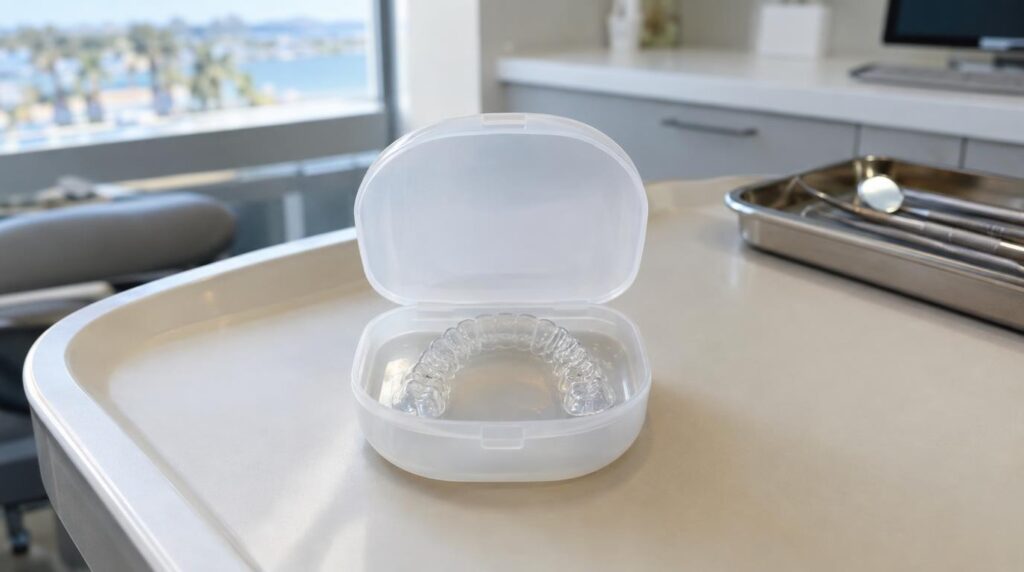
A night guard is a custom-fitted dental appliance worn during sleep that creates a protective barrier between the upper and lower teeth. The guard absorbs and distributes the forces generated by grinding and clenching, preventing direct tooth-to-tooth contact that causes wear and damage. By holding the jaw in a more relaxed position, night guards also reduce strain on the jaw muscles and temporomandibular joints.

What Materials Are Night Guards Made From?
Modern night guards are typically fabricated from medical-grade acrylic or flexible thermoplastic materials designed for durability and comfort. Custom-fitted night guards from dental practices use high-quality materials that maintain their shape over extended use while providing adequate cushioning. The thickness and hardness of the material can be adjusted based on the severity of the patient’s bruxism, ensuring optimal protection without excessive bulk that interferes with sleep quality.
What Are the Benefits of Wearing a Night Guard?
Wearing a night guard provides comprehensive protection for teeth, jaw joints, and facial muscles while promoting better sleep quality. The benefits extend beyond simply protecting tooth enamel to encompass overall oral health and comfort. Patients who incorporate night guards into their nightly routine often report significant improvements in morning symptoms and daytime functioning.
How Does a Night Guard Protect Your Teeth?
Night guards prevent the enamel erosion and physical damage caused by direct tooth contact during grinding episodes. By distributing biting forces evenly across the appliance surface, guards eliminate the concentrated pressure points that lead to cracks and fractures. Custom-fitted night guards from dental professionals provide superior protection compared to generic alternatives, as they are precisely shaped to match each patient’s unique dental anatomy and bite pattern.
Can Night Guards Help Reduce Jaw Pain and Headaches?
Many patients experience meaningful reductions in jaw pain, facial muscle soreness, and morning headaches after consistently wearing a night guard. By preventing the jaw muscles from fully engaging during grinding episodes, the appliance allows these muscles to rest and recover during sleep. The cushioning effect also reduces the strain transmitted to the temporomandibular joints, addressing both the muscular and joint components of bruxism-related discomfort. Patients throughout Chula Vista and Coronado have found that this conservative approach often eliminates the need for more invasive treatments.
What Types of Night Guards Are Available?
Night guards range from professionally custom-fitted appliances to over-the-counter options, each offering different levels of protection, comfort, and durability. Understanding the distinctions between these types helps patients make informed decisions about their oral health investment. The choice between custom and store-bought options significantly impacts both short-term comfort and long-term outcomes.

What Is the Difference Between Custom-Fitted and Store-Bought Guards?
Custom-fitted night guards are prescription dental appliances crafted from precise impressions of a patient’s teeth, ensuring an exact match to individual dental anatomy. Store-bought boil-and-bite guards are generic, one-size-fits-none appliances that patients shape themselves using hot water, often resulting in an imprecise fit that may shift during sleep. This difference in fit translates directly to comfort, effectiveness, and durability, with custom guards providing superior protection that justifies the professional investment.
Which Type of Night Guard Is Most Effective?
Dental professionals consistently recommend custom-fitted night guards as the most effective option for managing bruxism and protecting oral health. The precise fit ensures the guard stays securely in place throughout the night, providing consistent protection without requiring the jaw muscles to work harder to keep a loose appliance positioned. Custom guards also last significantly longer than store-bought alternatives, making them more economical over time despite the higher initial investment. Patients seeking the best outcomes for their teeth grinding protection should consult with a qualified dentist who can evaluate their specific needs and recommend the appropriate type of occlusal guard.
What Happens When You Start Wearing a Night Guard?
Beginning night guard therapy involves a brief adjustment period during which patients adapt to the sensation of sleeping with a dental appliance. Most patients find this adjustment surprisingly easy, especially when working with a properly fitted custom guard designed for optimal comfort. Understanding what to expect helps patients approach the transition with confidence and realistic expectations.
How Long Does It Take to Get Used to a Night Guard?
Most patients adjust to wearing a night guard within one to two weeks of consistent use. The initial awareness of having a foreign object in the mouth typically diminishes as the brain incorporates the guard into the sleep routine. Some patients may experience increased saliva production initially, which usually subsides within the first few nights. Those who struggle with adjustment often find that wearing the guard for short periods while awake helps accelerate the adaptation process.
Will Sleeping with a Night Guard Feel Comfortable?
Modern night guards are designed with patient comfort as a primary consideration, and properly fitted custom guards typically feel natural within the mouth. The smooth, polished surfaces of professionally made appliances prevent irritation to the cheeks and gums. Patients who invest in custom-fitted night guards from dental practices like Bajars Dental report that the minimal discomfort of adjustment is far outweighed by the relief from jaw pain, headaches, and tooth sensitivity they experience afterward.
Why Should You Talk to a Dentist About Night Guards?
Night guards represent a proven, conservative approach to managing bruxism and protecting oral health from the cumulative damage of teeth grinding. The combination of professional evaluation, precise fitting, and quality materials ensures the best possible outcomes for patients experiencing symptoms of jaw clenching or tooth wear. Consulting with a qualified dental professional allows for personalized recommendations tailored to individual needs and the severity of the condition.
Bajars Dental provides comprehensive evaluation and custom-fitted night guards for patients throughout the greater San Diego region, including those in Lemon Grove, La Mesa, National City, Chula Vista, and Coronado. The experienced team at Bajars Dental can assess your specific situation, discuss whether a night guard is appropriate for your needs, and create a custom solution designed for optimal comfort and protection. Scheduling a consultation allows you to take the first step toward better sleep, reduced jaw pain, and long-term preservation of your natural smile. Contact Bajars Dental today to learn how night guards can help you wake up feeling refreshed and pain-free.
Frequently Asked Questions
What is a night guard and how does it protect teeth from grinding?
A night guard is a custom-fitted dental appliance worn during sleep that creates a protective barrier between upper and lower teeth. It absorbs and distributes grinding forces, preventing direct tooth-to-tooth contact that causes wear, chips, and cracks. By holding the jaw in a relaxed position, it also reduces strain on jaw muscles and temporomandibular joints.
How many adults experience teeth grinding at night?
Approximately 10 to 15 percent of adults experience bruxism, with the majority occurring during sleep (sleep bruxism). This makes it difficult for individuals to recognize the problem without a partner’s observation or a dental professional’s evaluation. Many people only discover they grind their teeth when a sleep partner complains about the sound, or when a dentist identifies characteristic signs during a preventive care visit.
How long does it take to adjust to wearing a night guard?
Most patients adjust to wearing a night guard within one to two weeks of consistent use. The initial awareness of having a foreign object in the mouth typically diminishes as the brain incorporates the guard into the sleep routine. Some patients may experience increased saliva production initially, which usually subsides within the first few nights. Wearing the guard for short periods while awake can help accelerate adaptation.
What problems can untreated teeth grinding cause?
Untreated bruxism progressively damages teeth, jaw joints, and surrounding structures. The sustained pressure from grinding generates forces far exceeding normal chewing, leading to chips, cracks, fractures, worn enamel, and TMJ disorder. This cumulative trauma affects both dental health and overall comfort, often requiring extensive and costly dental work if left unaddressed.
What is the difference between custom-fitted and store-bought night guards?
Custom-fitted night guards are prescription dental appliances crafted from precise impressions of a patient’s teeth, ensuring an exact match to individual dental anatomy. Store-bought boil-and-bite guards are generic, one-size-fits-none appliances that patients shape themselves using hot water, often resulting in an imprecise fit that may shift during sleep. Custom guards provide superior protection, comfort, and durability compared to generic alternatives.
Can night guards help reduce jaw pain and headaches?
Many patients experience meaningful reductions in jaw pain, facial muscle soreness, and morning headaches after consistently wearing a night guard. By preventing the jaw muscles from fully engaging during grinding episodes, the appliance allows these muscles to rest and recover during sleep. The cushioning effect also reduces strain on the temporomandibular joints, addressing both muscular and joint components of bruxism-related discomfort.
How does teeth grinding lead to TMJ disorder?
TMJ disorder develops when constant strain from grinding overwhelms the jaw joints and surrounding muscles. The jaw muscles work overtime during sleep, causing inflammation in the temporomandibular joints that connect the jawbone to the skull. Night guards help by cushioning the bite and reducing muscular effort required during sleep, allowing jaw structures to rest and recover.