Root Canal and a Crown: What Happens and When?
October 19, 2026
Dental Crowns vs Veneers: Choose Based on Tooth Health
October 25, 2026
Last updated: October 22, 2026
Invisalign attachments are small, temporary, tooth-colored composite shapes bonded to selected teeth so a removable aligner can grip them and guide planned movements. Not everyone needs attachments, and their placement depends on the treatment plan. At Bajars Dental, we offer Invisalign and ClearCorrect treatment in San Diego and evaluate attachment needs individually.
What Are Invisalign Attachments?
The attachments stay on your teeth when you remove the aligner. They are temporary treatment features, not permanent parts of your teeth or pieces you insert into the tray.
What are Invisalign attachments made of?
Attachments are made from dental composite, the general type of resin material also used for tooth-colored fillings. The Invisalign System filing available through the U.S. Food and Drug Administration describes a clinician using dental composite and a placement template to form prescribed attachments on teeth. The aligner itself is a separate, removable plastic appliance.
How big and noticeable are Invisalign attachments?
Attachments are small, but their shapes and positions vary with the movement being planned. Tooth-colored composite helps them blend with enamel, although an attachment may still be noticeable at close range, particularly when the tray is out.
Why Would Your Clear Aligners Need Attachments?
Clear aligner attachments give a tray contact points that smooth tooth surfaces alone may not provide. Those contact points can improve aligner retention and help direct force for planned movements. The need for an attachment depends on the tooth, the intended movement, and how the clinician designs the treatment.
Which tooth movements can attachments help with?
A review in the Turkish Journal of Orthodontics explains that attachment shape, number, and position affect force delivery and retention. The review discusses rotations, vertical movements, changes in tooth angle, and other planned movements. An attachment gives the tray a shaped surface to press against when the intended movement calls for that added contact.
Do attachments guarantee a particular result?
No. Attachments are tools within a treatment plan, not a guarantee that a tooth will move exactly as predicted. The review emphasizes individualized design and notes that clinical studies often have not found a statistically significant advantage for optimized over conventional attachments. Progress still needs to be checked against the plan.
Do All Invisalign Treatments Come With Attachments?
No. Some clear-aligner plans use few attachments or none, while others call for attachments on several teeth. Complex or combined movements may require multiple attachments or a phased treatment plan.
Who might need fewer attachments or none?
A person whose planned movements can be managed through tray contact alone may need fewer bonded features. A movement that needs more specific force or a more secure tray fit may call for attachments. The number cannot be determined reliably from how straight teeth look in a photograph.
If attachments are not suitable for you, or an attachment-free plan cannot achieve the needed movement, your dentist may consider a different aligner plan or fixed braces, which use brackets and wires to move teeth.
How does a dentist decide where attachments go?
The dentist considers the starting tooth positions, intended movements, available tooth surfaces, and tray design. Attachment placement is planned in relation to each tooth’s intended movement and center of resistance, which affects how force moves the tooth. That individualized discussion applies whether a patient lives in San Diego or travels from National City.
How Are Invisalign Attachments Placed, and What Do They Feel Like?
New attachments can make a tray feel snugger, and removing the tray around them may take practice. Ask your clinician to demonstrate how to remove it without pulling on the bonded composite.
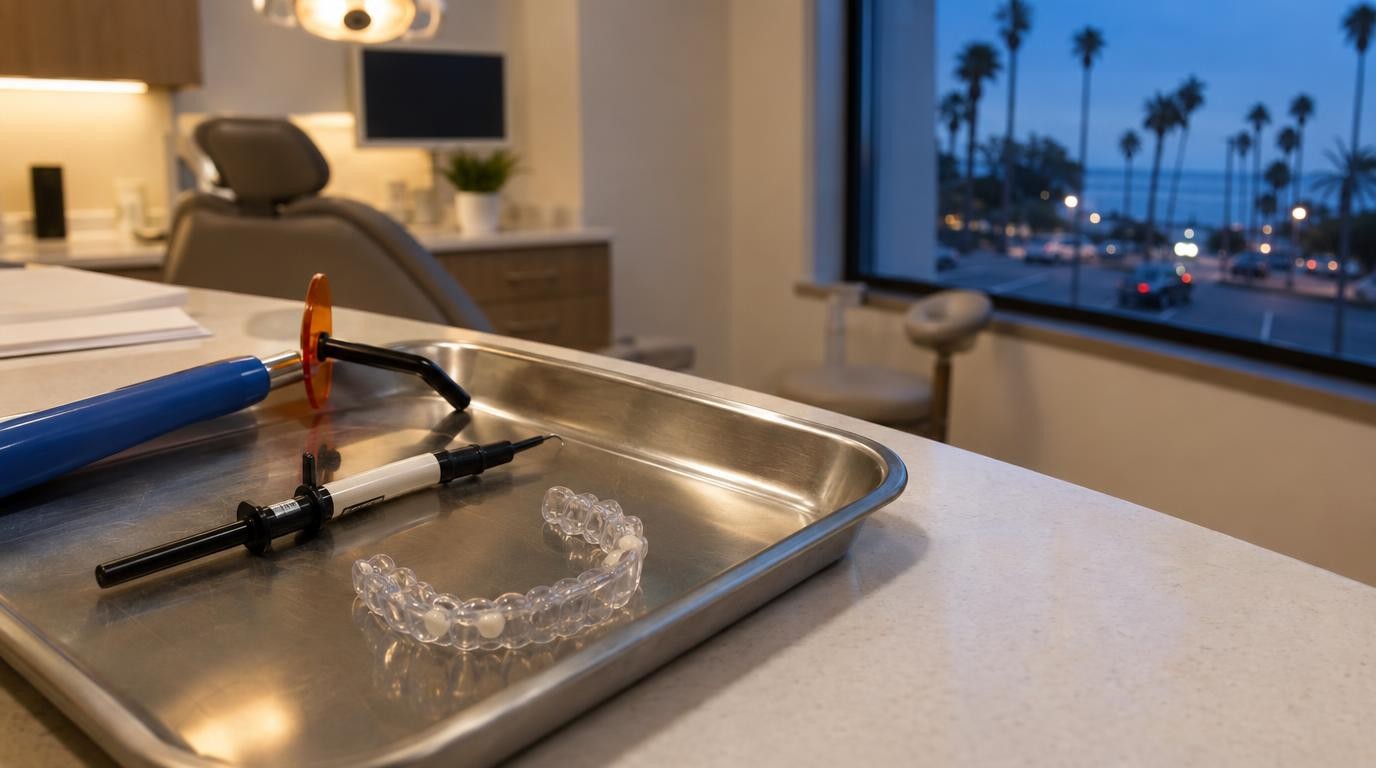
What happens during an attachment-placement visit?
- The clinician identifies and prepares the teeth selected in the treatment plan.
- A template helps position and shape the tooth-colored composite.
- The composite is cured, and the template is removed.
- The clinician checks the attachments and seats the aligner to assess its fit.
The Cleveland Clinic’s clear-aligner overview also describes fitting the appliance and placing small dental attachments to help the aligners move teeth. The exact sequence at an appointment may vary.
Will attachments feel rough at first?
An attachment can feel raised or slightly rough to the tongue or inner cheek at first. That sensation differs from pressure on the teeth after inserting a new tray.
Can Invisalign Attachments Go Behind Teeth?
Some attachments may be placed on a tongue-facing tooth surface when the treatment design permits, but behind-the-teeth placement is not an option for every movement or tray. The position must allow the aligner to contact the attachment as intended.
Will attachments still be visible with the trays out?
Yes, an attachment remains bonded to the tooth when its tray is removed. Tooth-colored does not mean invisible: lighting, tooth color, attachment position, and viewing angle all affect how noticeable it looks. A tongue-facing attachment may be less visible from the front, but its position must still work with the planned aligner.
How Do You Care for Attachments During Daily Wear?
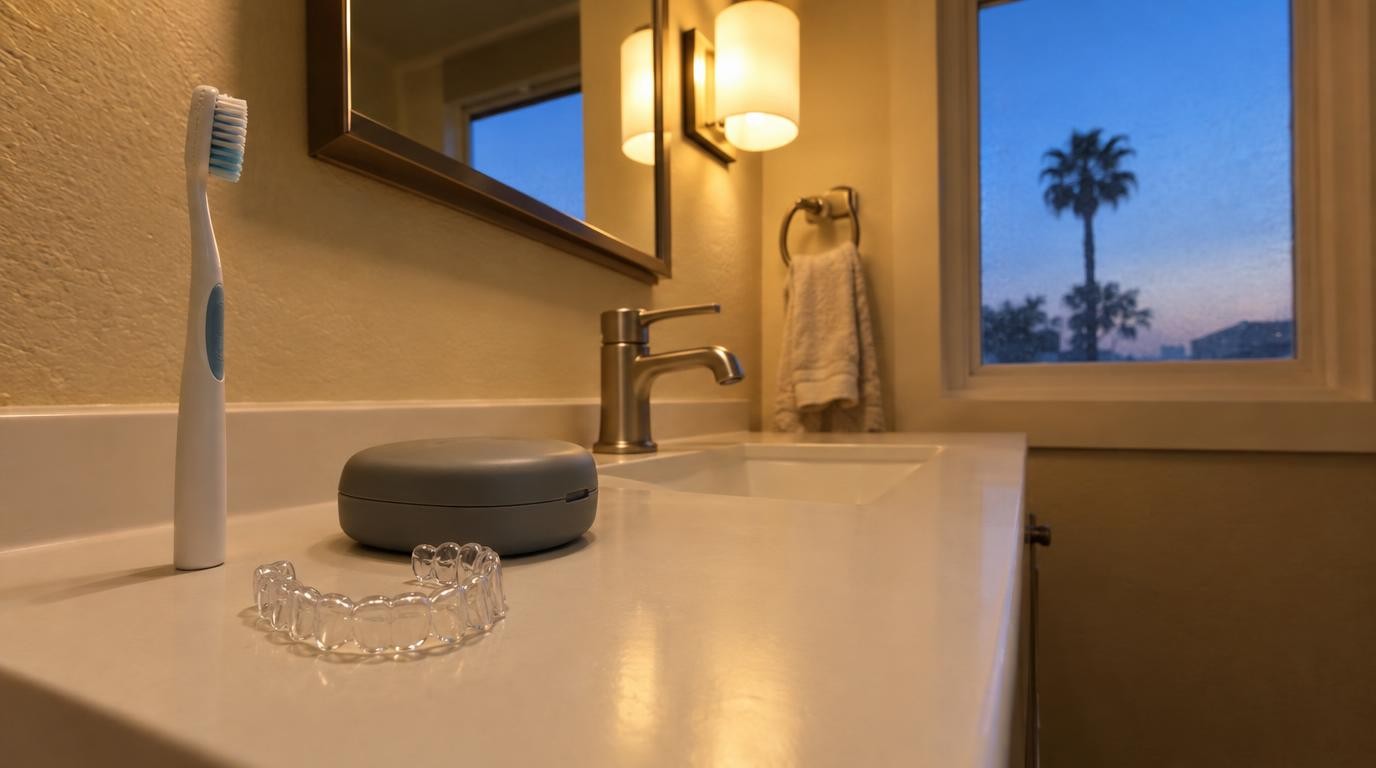
Remove clear aligner trays for meals and drinks other than plain water, and reinsert them according to your prescribed wear schedule. Brush and floss your teeth, and clean the trays with a soft-bristled brush and water; avoid hot water, which can deform the trays. Brush carefully around bonded attachments because plaque can collect at their edges.
Is there a fixed eating-time rule with Invisalign?
The “30-minute rule” is an informal way to budget time out of your aligners: keeping a meal break to about 30 minutes may help you meet your wear goal, but it is not a required limit for every meal. The Invisalign System filing available through the FDA describes approximately 20 to 22 hours of wear per day; follow the schedule your dentist prescribes. Time out of your aligners also needs to accommodate brushing, flossing, and cleaning the trays.
What should you do if an attachment falls off?
Contact our office for a fit check; if the tray no longer seats fully, do not force it into place. Tell the team which tooth lost the attachment and whether the tray still seats fully. Do not use household adhesive or attempt to replace the composite yourself; the office can determine whether the attachment needs to be restored or the plan adjusted.
Do Invisalign Attachments Stay On the Whole Time?
Attachments may remain through much of clear-aligner treatment, change during a refinement, or come off when the planned movement no longer needs them. Removal timing is individualized rather than fixed for every patient. The dentist decides when to change or remove attachments based on the treatment plan and the teeth’s progress.
How does a dentist remove Invisalign attachments?
At the appropriate visit, the clinician carefully buffs or grinds away the bonded composite with dental instruments, then polishes the tooth surface. This is a clinical procedure: scraping or prying at an attachment at home could damage enamel. If a raised area remains after a removal visit, ask the office to examine it.
What happens if your attachment plan changes?
If tooth movement differs from the plan, the clinician may reassess the aligner fit and decide whether attachments should be kept, repositioned, added, or removed. A refinement can involve an updated sequence of trays and different attachment needs. For more context on how plans may evolve, read our guide to clear-aligner treatment planning.
What Are the Risks of Invisalign Attachments, and Who Should Delay Treatment?
Attachments can temporarily irritate the mouth, collect plaque around their edges, or detach; improper removal can harm enamel. These problems are possible, not inevitable. Untreated decay or active gum disease may need treatment or stabilization before aligners begin. If you have had a reaction to dental bonding materials or aligner plastics, tell your dentist before use so the specific proposed materials can be assessed. Difficulty keeping teeth clean or following the prescribed wear schedule should also be discussed before treatment.
Can attachments irritate your mouth or collect plaque?
A newly bonded shape may rub a cheek or lip, and plaque can build up where composite meets the tooth if brushing misses that edge. Careful brushing and regular dental checks help the clinician spot concerns.
When should you call your dentist about an attachment?
Call for persistent pain, a loose or detached attachment, repeated rubbing that injures your mouth, or a tray that no longer fits. Seek emergency medical care for severe swelling or trouble breathing.
How Are Invisalign Attachments Different From Buttons and ClearCorrect Attachments?
An aligner plan may include bonded features on the teeth, elastic anchors, or both. Here is how the features differ:
| Feature | Purpose | Use in a plan |
|---|---|---|
| Invisalign attachment | Helps the tray grip a tooth and direct force | Bonded where the planned movement needs it |
| Elastic button | Provides an anchor for an elastic | Used when elastics are prescribed |
| ClearCorrect attachment | Helps its aligner grip a tooth and apply force | Shape and placement depend on the plan |
Does a tooth-bonded elastic button stay on when you remove your aligner?
Yes. A button bonded to a tooth stays in place when the tray comes out. Follow your dentist’s instructions for removing and replacing the elastic, and do not pry at the bonded button.
Can ClearCorrect treatment also use attachments?
Yes. An FDA device filing comparing clear-aligner systems lists attachments as available for ClearCorrect and Invisalign. Bajars Dental offers both systems; an examination and treatment design determine whether attachments are appropriate in either one. Our comparison of braces and clear aligners explains how removable trays differ from fixed appliances.
Frequently Asked Questions
Do Invisalign attachments hurt when they are bonded to your teeth?
Bonding an attachment to a tooth is usually not painful, and a numbing injection is typically unnecessary. You may feel the placement template against your teeth during bonding; pressure from the aligner comes afterward, when it is seated.
Can you eat crunchy or sticky foods with Invisalign attachments?
You can eat with your aligners removed, but the attachments remain bonded to your teeth. Very hard or sticky foods could loosen bonded composite, so use care when eating them.
Can Invisalign attachments become stained by coffee or tea?
Yes, the tooth-colored composite used for Invisalign attachments can become discolored over time, including from coffee or tea. The attachments stay on your teeth when you remove the aligners to drink. Brush around the attachments, but do not try to scrape or whiten the bonded composite yourself.
Can Invisalign attachments be bonded to crowns or veneers?
Sometimes, but bonding an attachment to a crown or veneer differs from bonding it to natural enamel. Whether it will hold and whether removal could affect the restoration depend on its material and condition. Ask your dentist to evaluate the restoration and planned tooth movement before placing an attachment.
How often do you change Invisalign trays when you have attachments?
Attachments do not set a separate tray-change schedule. The Invisalign System filing available through the FDA describes wearing each aligner for approximately 1-2 weeks before replacement. Your dentist prescribes your actual schedule; attachments generally stay bonded when you switch trays.
Can an Invisalign attachment block floss from passing between teeth?
Attachments are typically bonded to a tooth surface rather than placed in the gap between teeth, so you should still be able to floss between them. If floss catches on an attachment or will not pass, do not force it; ask your dentist to check the area.
What shapes can Invisalign attachments have?
Clear-aligner attachments can be rectangular, ellipsoidal, or specially designed shapes, depending on the planned movement. Shape and placement are selected to help the aligner deliver the force needed for the planned movement. Your dentist selects the design for your treatment.
What Should You Ask Before Starting Treatment With Attachments?
Before starting, find out which teeth would receive attachments, what movement each is designed to support, and whether its position would be visible or tongue-facing. Those details depend on your treatment plan.
For a personalized evaluation of clear aligners for teeth, contact Bajars Dental in San Diego to arrange a consultation. Our team can review your teeth, explain whether Invisalign or ClearCorrect is suitable, and show how attachments would fit into a proposed plan.
This information is general and is not medical advice. Talk to a licensed clinician about your own situation before making a treatment decision.