Night Guards: What You Need to Know About Teeth Grinding
August 17, 2026
Kids Dental Specialist – Why Families Choose Dedicated Care
August 23, 2026
Last updated: August 20, 2026
Bajars Dental welcomes patients from across the region, including La Mesa, Lemon Grove, and National City, to explore how modern technology is reshaping orthodontic care. Artificial intelligence is now playing a transformative role in clear aligners treatment planning, enabling more precise tooth movement predictions and customized treatment pathways than ever before. Recent advances in AI architecture have introduced systems capable of more efficient reasoning and lower computational costs, making sophisticated treatment planning accessible to more patients. For individuals considering invisible braces, this technological evolution offers a compelling reason to revisit orthodontic treatment options.
What Are Clear Aligners and How Do They Work?
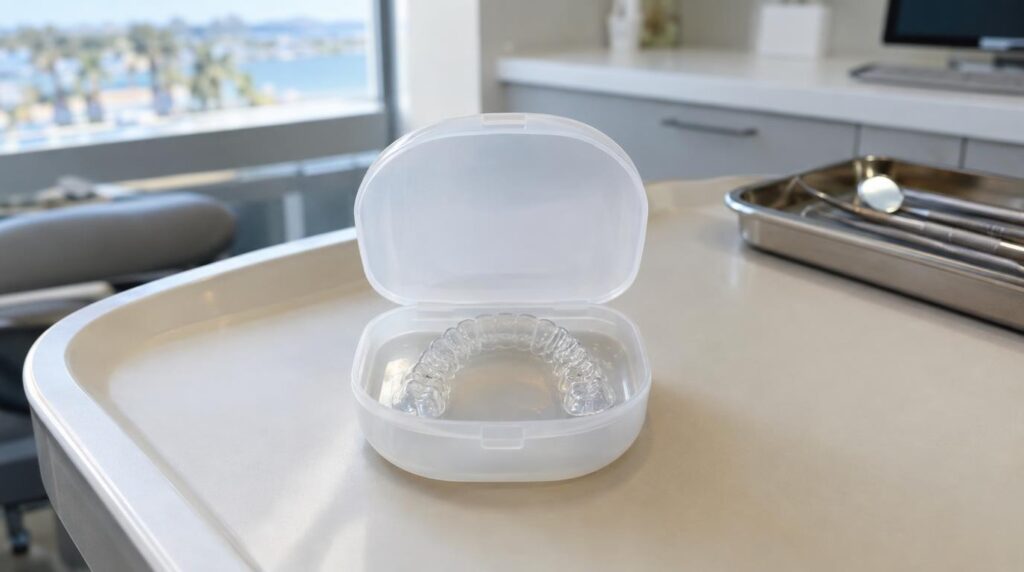
Clear aligners are custom-fabricated, transparent plastic trays designed to gradually move teeth into desired positions through gentle, controlled forces. Unlike traditional metal braces that rely on brackets and wires, clear aligner braces fit snugly over the teeth and can be removed for eating, drinking, and oral hygiene routines. Patients progress through a series of these trays, with each set worn for approximately one to two weeks before advancing to the next in the sequence.
What orthodontic issues can clear aligners address?
Clear aligners effectively treat a range of conditions including crowded teeth, gaps between teeth, overbite, underbite, crossbite, and open bite. Mild to moderate cases respond particularly well to this treatment modality, while more severe misalignments may require alternative approaches. The treating orthodontist determines candidacy based on individual dental anatomy and treatment goals.
What makes clear aligners different from traditional braces?
The primary distinction lies in aesthetics and practicality. Invisible braces offer a nearly undetectable appearance, allowing patients to undergo orthodontic treatment without the visual impact of metal brackets. Additionally, the removable nature of clear aligners means fewer dietary restrictions and easier maintenance of oral health during treatment. For busy adults and teens in San Diego County, these advantages often make clear aligners the preferred choice over conventional orthodontics.
How Is AI Changing the Way Clear Aligners Are Designed?
Artificial intelligence is revolutionizing orthodontic treatment planning by enabling more precise, personalized care strategies. Modern AI systems analyze vast datasets of tooth movement patterns, incorporating patient-specific anatomical factors to generate optimized treatment sequences. These advanced algorithms can identify potential complications before they arise, allowing clinicians to adjust plans proactively rather than reactively.
What new AI capabilities are improving treatment planning?
Recent developments in AI architecture have introduced more efficient reasoning systems with lower computational requirements, making sophisticated analysis more accessible. AI-powered platforms can now process three-dimensional dental scans and simulate thousands of potential treatment pathways, selecting the optimal route for each patient’s unique dental structure. This capability represents a significant advancement over traditional planning methods that relied more heavily on manual assessment.
How does AI help predict tooth movement more accurately?
AI systems examine patterns from extensive databases of orthodontic cases, learning from millions of tooth movement data points to anticipate how specific teeth will respond to applied forces. This predictive power enables clinicians to customize force levels and treatment duration for individual patients, improving overall treatment predictability. Research on AI-driven root and bone prediction for clear aligner treatment planning demonstrates how machine learning enhances precision in orthodontics.
What Benefits Do AI-Enhanced Clear Aligners Offer Patients?
Patients receiving AI-assisted clear aligner treatment experience several notable advantages compared to conventional approaches. The integration of artificial intelligence into treatment planning creates a more refined, responsive orthodontic experience that adapts to individual patient needs throughout the treatment journey.
How does AI improve treatment comfort and fit?
AI algorithms optimize force distribution across each aligner tray, reducing pressure points and minimizing discomfort during tooth movement. Traditional planning sometimes resulted in uneven force application, causing unnecessary soreness. Smart orthodontics technology allows for more precise calibration of each movement, contributing to a more comfortable patient experience from the first tray through the final stages of treatment. Invisalign attachments are small tooth-colored shapes that help aligners grip teeth and guide certain movements.
What time savings can patients expect with smart treatment planning?
AI-assisted planning significantly reduces the time required to develop comprehensive treatment strategies. In clinical practice, what once required hours of manual analysis can now be accomplished in minutes with superior accuracy. Patients benefit from fewer office visits for adjustments and more efficient overall treatment sequences. According to the FDA, AI-driven efficiency improvements are becoming standard across healthcare applications, reducing administrative burden while enhancing clinical outcomes.
What Orthodontic Conditions Can AI-Assisted Clear Aligners Treat?
AI-enhanced clear aligner technology expands the range of treatable orthodontic conditions while improving outcomes for cases that were previously challenging. The advanced predictive capabilities of artificial intelligence allow clinicians to address complex situations with greater confidence and precision.
Can AI improve treatment for open bite and overbite correction?
Open bite and overbite correction benefit substantially from AI-assisted planning. These conditions involve vertical tooth movements that require careful force calibration. AI systems analyze the relationship between upper and lower teeth, predicting how corrections in one area will affect the overall bite relationship. This comprehensive understanding enables more effective treatment of malocclusions that might have required traditional braces in the past.
How effective are smart clear aligners for crowded or gapped teeth?
Crowded teeth and gaps between teeth represent some of the most common reasons patients seek orthodontic treatment. AI-optimized planning identifies the most efficient paths for tooth movement, often reducing treatment duration compared to traditional methods. For patients with crooked teeth, the technology creates sequential aligner progressions that guide teeth into proper alignment with minimal unnecessary movement.
Where Can Residents of San Diego County Access AI-Enhanced Clear Aligners?
Residents throughout San Diego County have access to practices offering AI-assisted clear aligner treatment. From Chula Vista to Coronado, and from National City to the surrounding communities, qualified providers are bringing this advanced technology to local patients seeking improved smiles.
What should patients look for when choosing a clear aligner provider?
When selecting a provider for clear aligners near me, patients should seek practices utilizing current AI planning technologies and offering comprehensive diagnostic services. Look for providers who create detailed 3D simulations showing projected treatment outcomes. Experience with your specific orthodontic concerns matters significantly, as does the availability of ongoing monitoring throughout treatment.
How does a consultation help determine if clear aligners are right for you?
A consultation appointment provides the opportunity to discuss goals, examine dental health, and understand all available treatment options. Bajars Dental offers clear aligner options including Clear Correct and Invisalign treatments for patients throughout the region. During this visit, patients learn whether AI-enhanced clear aligner therapy suits their needs or whether alternative approaches might better address their orthodontic concerns.
What Does the Future Hold for AI in Orthodontics?
The trajectory of AI in orthodontics points toward increasingly sophisticated applications that will further enhance patient care and treatment outcomes. Emerging technologies continue to expand what is possible in dental correction, promising even more precise, efficient, and accessible orthodontic treatment options.
Future developments include AI systems capable of real-time treatment monitoring through smartphone integration, allowing clinicians to assess progress remotely between appointments. Enhanced predictive modeling will enable treatment outcomes to be forecast with greater accuracy as these systems learn from expanding datasets of patient experiences. Additionally, AI-powered analysis of facial structure and dental aesthetics may soon help design treatments optimized not just for tooth alignment but for overall facial harmony and patient satisfaction.
These advances position AI-assisted orthodontics to become the standard of care for patients seeking the best clear aligners available. As the technology matures, treatments will become faster, more comfortable, and more accessible to patients across San Diego County and beyond.
Residents interested in exploring how AI-enhanced clear aligners can improve their smiles are encouraged to schedule a consultation at Bajars Dental. The experienced team welcomes patients from La Mesa, San Diego, and surrounding communities to discover whether clear aligner treatment aligns with their orthodontic goals. Contact Bajars Dental today to begin your journey toward a more confident, evenly aligned smile.
Frequently Asked Questions
How does AI improve clear aligner treatment planning?
AI analyzes vast datasets of tooth movement patterns combined with patient-specific anatomical factors to generate optimized treatment sequences. Modern AI systems can process 3D dental scans and simulate thousands of potential treatment pathways, selecting the optimal route for each patient’s unique dental structure. This enables clinicians to identify potential complications before they arise and adjust plans proactively rather than reactively.
What orthodontic conditions can AI-enhanced clear aligners treat?
AI-enhanced clear aligners effectively address crowded teeth, gaps between teeth, overbite, underbite, crossbite, and open bite. These systems are particularly beneficial for mild to moderate cases. The advanced predictive capabilities allow clinicians to treat complex malocclusions with greater confidence, including conditions involving vertical tooth movements that require careful force calibration.
How long does clear aligner treatment typically take?
While treatment duration varies based on individual cases, AI-optimized planning often reduces overall treatment time compared to traditional methods. Each set of aligner trays is typically worn for one to two weeks before progressing to the next in the sequence. Patients benefit from fewer office visits for adjustments thanks to more efficient overall treatment sequences developed through AI-assisted planning.
What are the main benefits of AI-assisted clear aligner treatment?
AI-assisted clear aligner treatment offers improved comfort through optimized force distribution that reduces pressure points and minimizes discomfort. Patients experience more precise fit and fewer office visits since AI significantly reduces the time required to develop comprehensive treatment strategies. The technology also enables proactive identification of potential complications, creating a more responsive orthodontic experience.
How do clear aligners differ from traditional metal braces?
Clear aligners are custom-fabricated transparent plastic trays that fit snugly over teeth and can be removed for eating and oral hygiene, unlike fixed metal brackets and wires. They offer a nearly undetectable appearance, allowing patients to undergo orthodontic treatment without visible hardware. This means fewer dietary restrictions and easier maintenance of oral health during treatment.
How does AI help predict tooth movement more accurately?
AI systems examine patterns from extensive databases containing millions of tooth movement data points to anticipate how specific teeth will respond to applied forces. This predictive power enables clinicians to customize force levels and treatment duration for individual patients. The technology identifies the most efficient paths for tooth movement, often reducing unnecessary movement and improving overall treatment predictability.
What does the future of AI in orthodontics look like?
Future AI developments include real-time treatment monitoring through smartphone integration, allowing clinicians to assess progress remotely between appointments. Enhanced predictive modeling will enable more accurate treatment outcome forecasts as systems learn from expanding datasets. AI-powered analysis of facial structure and dental aesthetics may soon help design treatments optimized for overall facial harmony, not just tooth alignment.