
Mouthguard With Braces: How to Choose One for Sports
November 24, 2026
Last updated: November 26, 2026
A Maryland bridge dental restoration replaces a missing tooth with a fixed artificial tooth held by one or more wings bonded to suitable supporting teeth. At Bajars Dental, we offer dental bridges to replace missing teeth and help address changes in speaking and chewing. A Maryland bridge’s wing or wings usually require less tooth preparation than the crowns used for a traditional bridge, but whether it will hold securely depends on the supporting teeth and bite around the gap.
What is a Maryland bridge in dentistry?
A Maryland bridge consists of a replacement tooth, called a pontic, and one or more wing-shaped retainers bonded to supporting teeth. Unlike a traditional crown-supported bridge, this design can close a tooth gap without preparing the neighboring teeth for full crowns, although suitability depends on the individual case.
What parts make up a resin-bonded bridge?
A wing may be made from cast metal, porcelain or another ceramic, or resin, depending on the bridge design. The Journal of the American Dental Association review of resin-bonded fixed partial dentures explains that the design was originally called a Maryland bridge. The name refers to a particular type of fixed bridge, not every bridge that replaces a tooth.
For a broader look at bridge designs, see our guide to how dental bridges restore a smile.
How does a Maryland bridge stay in place?
A Maryland bridge stays in place when dental resin bonds one or more wings to the back of a suitable supporting tooth or teeth. The dentist evaluates the gap, supporting teeth, and bite before planning a bridge that fits. Unlike a dental implant, a resin-bonded bridge does not replace the missing tooth root or attach to the jawbone.
Why is the support bonded behind a tooth?
Placing each bonded wing on a tongue-facing tooth surface helps keep the support less visible from the front.
Who is a good candidate for a Maryland bridge?
A Maryland bridge may suit someone with a missing front tooth, at least one sound tooth next to the gap with enough enamel for bonding, and a bite that does not put excessive force on the bonded support. The position of the tooth gap, existing dental work, and the way the teeth meet can make another replacement more appropriate.
Can a Maryland bridge replace a missing front tooth?
Yes, a missing front tooth is a common reason to consider a resin-bonded bridge. A front-tooth location alone does not establish suitability: large restorations on adjacent teeth, limited enamel, or an uneven bite can change the recommendation. Patients weighing a bridge against a root-supported replacement can also read about dental implants for missing front teeth.
What happens when you get a Maryland bridge?
Maryland bridge treatment follows these steps; the number of visits depends on the treatment plan.
- The examination checks whether the supporting tooth or teeth and your bite can accommodate bonded support.
- Planning and fabrication create a pontic that fills the gap and one or more wings that fit the supporting teeth.
- At the fitting visit, the dentist checks the restoration, prepares each bonding surface as appropriate, bonds the wing or wings, and checks how your teeth meet.
Will a supporting tooth need to be reshaped?
Preparation is often limited compared with the preparation for full crowns, but it is not necessarily absent. The amount depends on the supporting tooth or teeth, wing design, and space available when the teeth meet.
Does placement require surgery?
Bonding the wing or wings to teeth generally does not require implant surgery because no implant is placed in the jawbone. A temporary tooth replacement may be used while the bridge is being made.
What should you expect after a Maryland bridge is bonded?
A bonded Maryland bridge stays in the mouth for daily cleaning rather than being removed like a removable denture. Bonding does not involve implant surgery or a surgical healing period, so you can generally return to your usual daily activities after the visit. If local anesthetic leaves your mouth numb, wait until the numbness wears off before eating to avoid biting your cheek or tongue. Follow our team’s instructions about chewing with the new bridge. Speech and chewing may feel unfamiliar at first, and the time needed to adjust varies.
How do you clean around a Maryland bridge?
Brush the bridge and supporting teeth, and clean beneath the pontic and around the wings with the flossing or interdental tools your dental team recommends. These areas can be harder to reach with ordinary brushing. Routine dental visits allow the team to check the supporting teeth, gums, bond, and bite.
When should you call the dentist after placement?
Contact the treating office if the bridge moves, the teeth meet differently, or discomfort does not settle. Do not try to glue a loose wing back in place. Seek urgent medical care for severe swelling or difficulty breathing or swallowing.
What are the risks of a Maryland bridge, and who should avoid one?
Debonding—a wing coming loose from a tooth—is a key concern with a Maryland bridge; its likelihood depends on the design and your bite. The bridge can also fracture, and cleaning difficulties may contribute to gum irritation or decay near supporting teeth. Complication figures for other types of fixed bridge do not establish a reliable Maryland-bridge-specific risk percentage. Untreated decay or gum disease, inadequate supporting teeth or enamel, and heavy bite forces can make this design unsuitable. Discuss these risks and your own suitability with our dental team before treatment.
What can cause a Maryland bridge to come loose?
Repeated force on the pontic or its bonded support, a bonding surface that cannot provide reliable retention, or a change in a supporting tooth can weaken the attachment. Some back-tooth gaps are less suitable because chewing forces may be greater. A loose bridge needs professional assessment: the dentist must check the restoration, supporting teeth, and bite before deciding whether it can be reattached or needs another approach.
How does a Maryland bridge compare with a traditional dental bridge?
The designs differ in how they use the teeth beside a gap:
| Feature | Maryland bridge | Traditional fixed bridge |
|---|---|---|
| Support | One or more wings bonded to supporting teeth | Crowns fitted over neighboring teeth |
| Tooth preparation | Generally limited | More preparation to fit crowns |
| Key consideration | Enamel available for bonding and force on the wings | Condition of the teeth receiving crowns and chewing forces |
A removable partial denture is another possible way to replace a missing tooth. Unlike a Maryland bridge, you take it out for cleaning. Our team can help you compare these options based on the teeth around the gap and your needs.
Which option changes the neighboring teeth less?
The Maryland design generally preserves more tooth structure because its wing or wings bond to supporting tooth surfaces instead of covering those teeth with full crowns. If those teeth already need crowns, however, a traditional bridge may make more sense than preserving surfaces that are not sound.
How do the two bridges handle chewing forces?
Both designs transfer force to supporting teeth, but they retain their support differently. A bite that places repeated pressure on bonded wings may favor another design; crown support also requires teeth strong enough to carry a bridge. The choice should address chewing difficulty and bite function, not just how the smile gap looks. Our comparison of a fixed bridge and a dental implant explains another distinction, while an educational guide to bridges for tooth gaps provides additional background.
How long can a Maryland bridge last?
A Maryland bridge can function for years, but a loose bond may need professional rebonding, and the bridge may eventually need replacement. There is no guaranteed lifespan: durability depends on the design and material, the condition of the supporting teeth, bite forces, cleaning, and follow-up care.
What affects whether the bond stays secure?
A 2026 systematic review of prosthetic materials in tooth-supported fixed dental prostheses included 17 studies and found that material choice should account for mechanical demands and patient characteristics. The review examined tooth-supported fixed prostheses broadly; its findings do not establish how long a Maryland bridge will last.
What is the dental code for a Maryland bridge?
“Maryland bridge” does not identify a universal code for the entire restoration. Dental coding depends on the pontic and the design and materials of its retainers. A treatment plan may identify the pontic and retainers separately.
Is D6240 a bridge?
D6240 identifies a porcelain-fused-to-high-noble-metal pontic, according to the American Dental Association’s 2026 code crosswalk. A pontic is the replacement tooth, so that code alone does not identify an entire Maryland bridge or show how its wings are made.
Frequently Asked Questions
Can a teenager get a Maryland bridge while their jaw is still growing?
A resin-bonded bridge may be considered for a teenager with a missing tooth, depending on their teeth and bite. A Journal of the American Dental Association article on tooth autotransplantation notes that bonded replacements, including Maryland bridges, can be favorable in growing patients because they require minimal tooth reduction. A dentist, such as a pediatric dentist or one experienced in tooth replacement, should assess the teenager’s supporting teeth, enamel, and bite before recommending treatment.
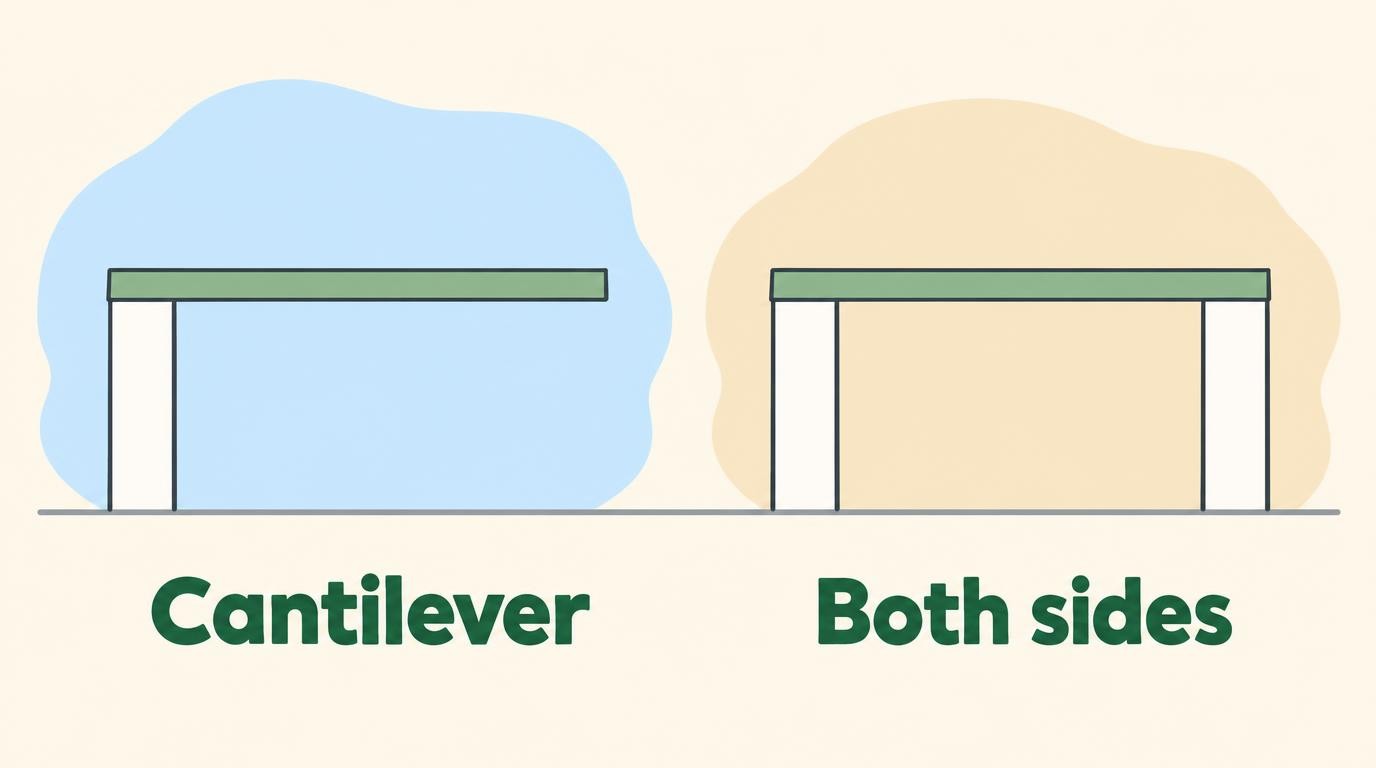
What is a cantilever resin-bonded bridge?
It is a bridge supported by a single wing bonded to one tooth rather than wings on both sides of the gap. Because that tooth carries the replacement, our team must assess its bonding surface and the forces your bite will place on it.
Can a Maryland bridge be used while waiting for a dental implant?
Yes, a Maryland bridge can sometimes provide a fixed replacement while a patient waits for an implant. Because its wings bond to teeth rather than the jawbone, the dentist can consider it when implant placement must be delayed. Suitability depends on the supporting teeth, available bonding surfaces, and bite; it is not automatically an appropriate temporary option.
What dental codes are used for the wings of a Maryland bridge?
The wing codes depend on the retainer material. A CDC-hosted list of dental procedure codes identifies D6545 as a cast-metal retainer and D6548 as a porcelain or ceramic retainer for a resin-bonded fixed prosthesis. The American Dental Association’s procedure-code list also identifies D6549 as a resin retainer for a resin-bonded fixed prosthesis. The replacement tooth, or pontic, has a separate code.
Can I get a Maryland bridge if I have a metal allergy?
Possibly. Resin-bonded bridges can use porcelain or ceramic wings rather than metal. The pontic’s material also matters for someone with a metal allergy, and a ceramic retainer is not suitable for every bite.
Does a Maryland bridge prevent jawbone loss after a tooth is lost?
No. A Maryland bridge fills the visible tooth gap but does not replace the missing root or attach to the jawbone. It should not be relied on to prevent bone changes at the missing-tooth site.
How can you find out whether a Maryland bridge is right for you in San Diego?
What should you ask at a dental bridge consultation?
- Does Bajars Dental offer resin-bonded Maryland bridges for my situation?
- Are the teeth beside my gap healthy enough, with suitable surfaces for bonded wings?
- Would my bite put too much force on the bridge?
- Would a traditional fixed bridge or another clinically appropriate replacement better address my missing tooth?
Dr. Sandris Bajars works in general dentistry, endodontics, and orthodontics, and Dr. Tania Bajars works in general dentistry. To learn which bridge designs we offer, including whether a Maryland bridge is available, contact Bajars Dental in San Diego for a consultation.
This information is general and is not medical advice. Talk to a licensed clinician about your own situation before making a treatment decision.
About the doctors at Bajars Dental
Dr. Sandris Bajars – General dentistry, endodontics and orthodontics; over 15 years of experience.
Dr. Tania Bajars – General dentistry.