Does Invisalign Fix an Overbite? What Adults Can Expect
November 9, 2026
Dental Implants for Missing Front Teeth: A Crown-First Plan
November 15, 2026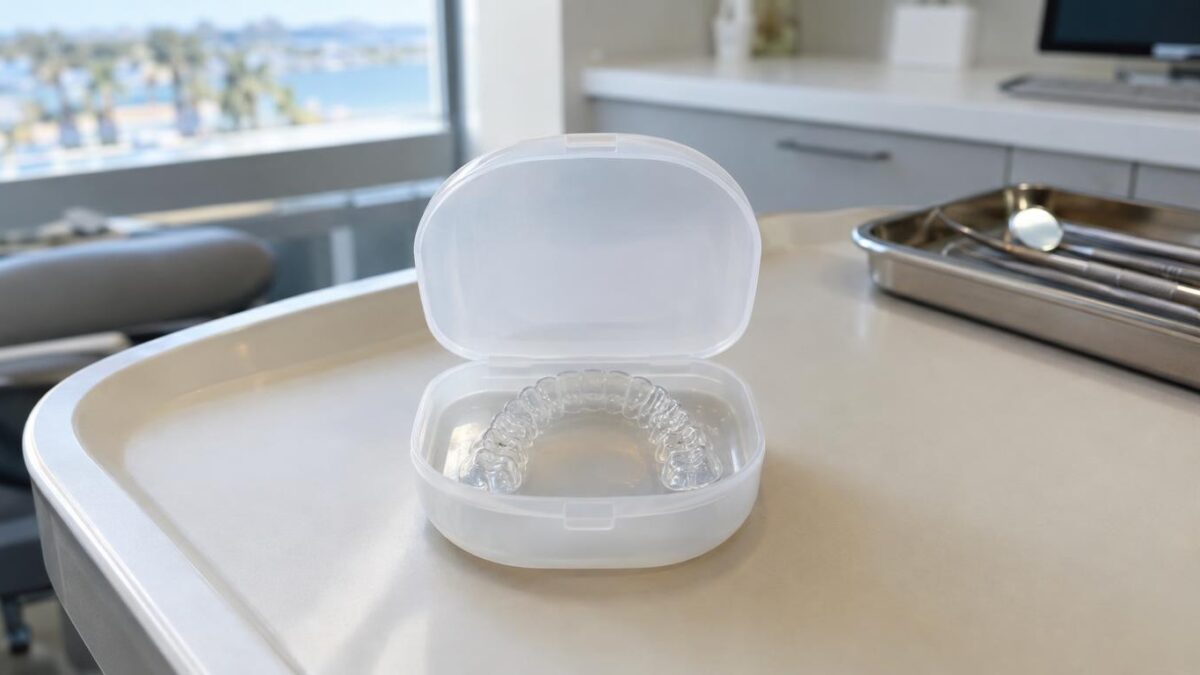
Last updated: November 13, 2026
“Custom-fit” can describe either a dentist-made night guard fitted and bite-checked by a professional or an over-the-counter guard you mold to your teeth at home. Both place a barrier between your teeth during sleep, but molding a guard at home does not include a dental examination or professional bite adjustment. At Bajars Dental in San Diego, we offer custom-made bite splints to help limit grinding-related wear and protect dental work. A splint does not necessarily stop grinding or clenching.
What are custom fit night guards for teeth grinding, and how do they work?
A custom night guard covers the teeth in one arch and separates them from the opposing teeth to limit grinding-related damage while you sleep. It may fit over your upper or lower teeth, depending on your bite and the appliance’s design.
How does a bite splint protect teeth while you sleep?
The guard takes the contact that would otherwise occur between opposing teeth. The American Dental Association’s guidance on teeth grinding explains that a dentist may recommend a night guard to protect teeth during sleep and that a custom guard can provide a closer fit than a store-bought option. At Bajars Dental, we offer custom-made splints for hard or soft bites; the appropriate design depends on the examination.
Who should ask a dentist about a custom night guard?
Nighttime grinding or clenching, visible tooth wear, and morning jaw soreness or headaches can point to bruxism. Grinding can chip or crack teeth and damage crowns or other restorations. Symptoms alone do not establish bruxism, and persistent facial or jaw pain may have another cause.
Can a night guard help if I have crowns, chipped teeth, or morning jaw pain?
A dentist can check whether teeth or restorations are damaged and whether an occlusal guard for teeth grinding is suitable for your bite. A guard may help limit further grinding-related wear, but an existing chip or painful tooth may need separate care. A guard may ease grinding-related jaw strain, but it may not relieve pain from another cause. For more on what to look for, see our guide to how grinding can damage teeth.
How is a custom night guard fitted at the dentist?
What happens during the examination, fitting, and follow-up?
- Examination: The dentist looks for wear or damage, reviews symptoms, and checks restorations that could affect the appliance’s fit.
- Impression and fabrication: The dentist takes an impression of your teeth to guide fabrication of the custom splint. A digital scan is another possible way to record the shape of the teeth.
- Fit and bite check: The dentist checks how the guard seats and how the teeth meet while it is worn.
- Follow-up when needed: An adjustment can address a spot that rubs, feels loose, or makes the bite feel uneven.
What is the best mouthguard for grinding: custom or boil-and-bite?
For regular nighttime grinding, a dentist-made guard that is checked and adjusted for your bite is generally the better-fitting option, particularly if you have crowns or other dental work or have trouble getting a guard to fit. An at-home molded guard may be an option if a dentist checks that it fits acceptably and oversees its use.
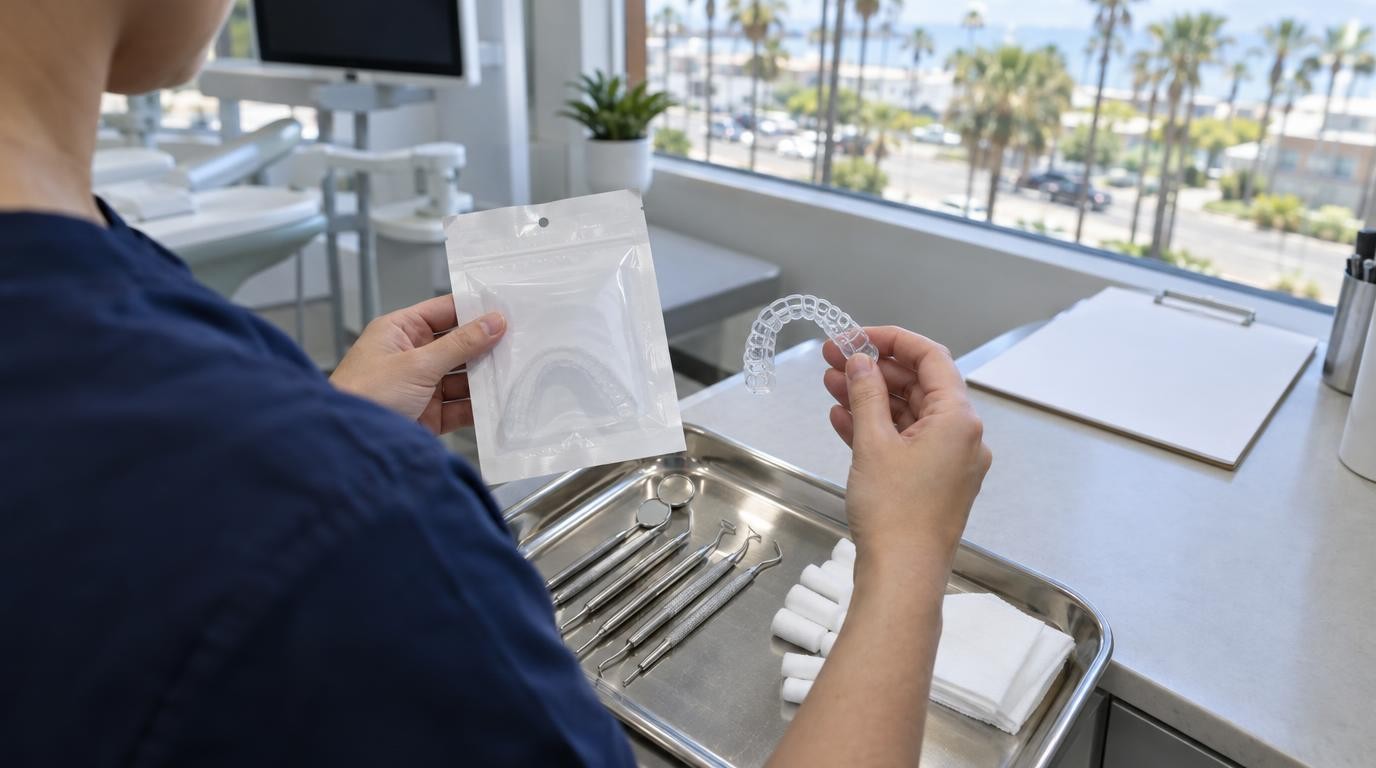
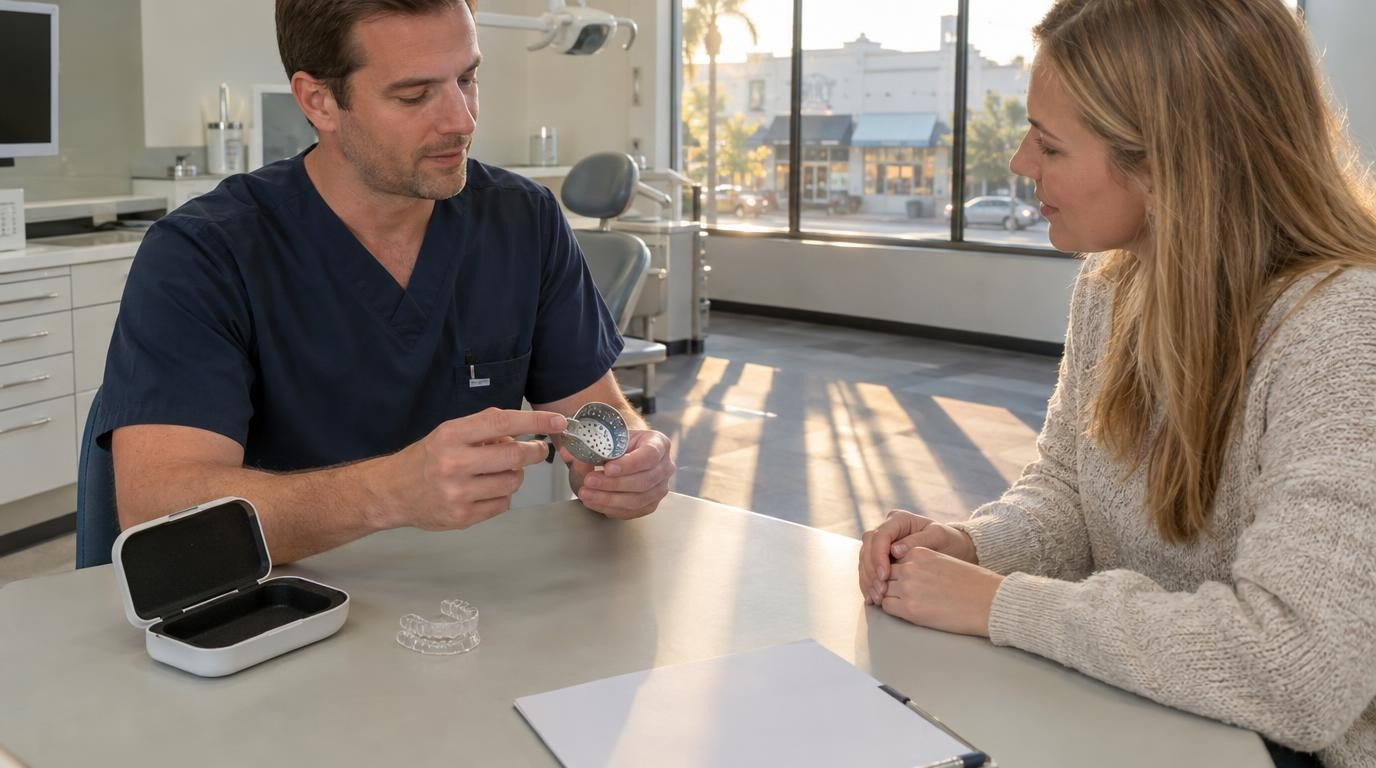
The practical differences are fit, oversight, and the ability to adjust the appliance:
| Consideration | Dentist-fitted splint | Self-molded guard |
|---|---|---|
| Fit | Made from a record of the patient’s teeth | Shaped at home by the wearer |
| Bite check | Can be checked and adjusted professionally | May not receive a dental check |
| Dental work | Restorations can be assessed during planning | Fit around restorations may go unassessed |
What did the head-to-head trial find about at-home guards?
The over-the-counter group had difficulty making clinically acceptable splints and had significantly more nighttime rhythmic masticatory muscle activity bursts than the Michigan-splint group in a 2020 randomized trial by Gerstner and colleagues. The trial assigned 67 participants to an at-home splint or a dentist-fabricated Michigan splint; 61 completed four months of nightly wear. Compliance and the other measured outcomes did not differ significantly between groups.
The trial supports professional oversight, not a claim that every custom guard stops grinding or relieves headaches. Its authors also noted that over-the-counter splints may help curb the effects of sleep bruxism when dentists oversee their use. An occlusal-splint systematic review in BMC Oral Health included 15 eligible studies and found that adjustable splints, including full-occlusion biofeedback splints, were more effective at reducing sleep-bruxism episodes and improving patient-reported symptoms than other splints studied. Effects varied by design, and potential adverse effects need individual consideration; the finding does not mean an ordinary custom guard has the same effect.
Should I choose a hard or soft night guard?
Both hard and soft guards can provide a protective barrier. A soft guard offers a more flexible barrier, while a hard-resin stabilization splint can be adjusted to balance the bite when grinding-related jaw strain is a concern. Neither material is best for everyone. We consider your bite, wear pattern, symptoms, restorations, and the appliance’s fit when recommending a design.
How long does it take to get used to a custom night guard?
At Bajars Dental, we advise allowing about a week to get used to a custom splint, though individual adjustment times vary. Mild initial awareness of the appliance differs from persistent rubbing, pain, or a bite that feels changed after the guard is removed.
What should I do if the guard rubs or changes how my bite feels?
Do not try to reshape or trim a custom splint yourself. Note where it rubs, whether it stays seated, and whether your teeth meet normally after removal, then arrange a fit check. An adjustment may improve comfort without compromising the intended fit. Our guide to bite splint discomfort and adjustment explains the distinction between getting used to an appliance and a fit problem.
What results can I expect, and how can I stop grinding at night?
A well-fitted night guard can reduce direct tooth-to-tooth contact and help protect teeth from grinding-related wear. A guard does not reliably eliminate sleep bruxism, so less wear should not be mistaken for proof that clenching has stopped. Continuing jaw pain or headaches calls for assessment of possible causes beyond tooth contact. If grinding is associated with jaw or neck muscle pain, a clinician may recommend physical therapy to help relieve that pain; it is not a guaranteed way to stop sleep grinding.
How can I stop my teeth from grinding at night?
Nighttime grinding is not always something a person can consciously stop. The Cleveland Clinic’s bruxism guidance identifies factors that may contribute, including stress, sleep disorders, certain medications, and lifestyle habits. Stress-management approaches such as meditation or exercise may help. Reducing caffeine or alcohol when they contribute to grinding and quitting tobacco or nicotine may also help, but none of these changes is guaranteed to stop it. A grinding guard is not a substitute for sleep apnea treatment or a guaranteed treatment for TMJ disorder.
What are the risks of a night guard, and who needs an evaluation first?
Night guards can cause temporary discomfort, and a poorly fitting appliance may cause rubbing or soreness in the teeth, gums, or jaw. A guard that changes how the bite feels needs a fit check. Damaged teeth and persistent jaw pain warrant evaluation rather than self-treatment with an unadjusted guard; suspected sleep apnea calls for a sleep evaluation.
Can a poorly fitting night guard make symptoms worse?
Yes. A guard that does not fit or balance the bite properly can aggravate discomfort. An article on Cleveland Clinic’s site about mouthguards and jaw pain explains that the cause of jaw pain and the appliance’s fit both matter. Discuss persistent pain, damaged restorations, or suspected sleep-related breathing symptoms with your own licensed clinician before relying on a guard. Seek urgent care for facial swelling with trouble breathing or swallowing; those are not normal adjustment symptoms.
How do I care for a night guard, and when should it be checked?
Care for a night guard by following your dentist’s cleaning instructions, avoiding hot water that could distort the appliance, letting it dry, and storing it in its case.
What signs mean my guard needs an adjustment or replacement?
Visible damage, a change in retention, a rough edge, or discomfort are reasons to bring the guard to a dental visit. A crown or other change to your teeth can also affect how it seats. Replacement depends on the appliance’s condition and fit rather than a fixed schedule; bring the guard to dental checkups so its condition can be assessed.
Frequently Asked Questions
Can I use my night guard as a sports mouthguard?
No. A night guard protects against grinding during sleep, while a sports mouthguard is designed to cushion impacts during activities such as basketball or hockey. The American Dental Association notes that sports guards have extra cushioning that may be uncomfortable for sleep. Use a separate sports mouthguard if you need protection from athletic impacts.
Do I need to wear a night guard every night?
Usually, yes. If your dentist prescribes a guard for sleep grinding, regular nighttime wear helps protect your teeth while the appliance is in place. Cleveland Clinic advises that people using a guard for teeth grinding will likely need to wear it every night during sleep.
Can I wear my night guard if I clench my teeth during the day?
Possibly. Cleveland Clinic notes that guards for grinding and clenching can be worn during the day or at night. Whether your nighttime guard is suitable for daytime wear depends on its design, fit, and your symptoms.
How long does a custom night guard usually last?
A custom night guard can last several years with proper care, although frequent wear or changes to your teeth may mean replacing it sooner, according to Cleveland Clinic. There is no guaranteed replacement date. Bring your guard to dental visits so your dentist can assess its fit and condition.
Is a night guard for TMJ pain different from one for teeth grinding?
It can be. A hard resin stabilization splint can be adjusted to support a balanced bite when jaw pain is related to grinding or clenching, according to an article on Cleveland Clinic’s site. Not every grinding guard has that design, and an appliance may not relieve jaw pain from another cause.
Can children or teenagers use a custom night guard for grinding?
Yes, a child or teenager can use a custom guard if a dentist determines it is appropriate after assessing their teeth, symptoms, and growth. Grinding alone does not establish the need: children may outgrow bruxism, and changes as teeth and mouths grow may require the guard to be refitted or replaced.
What if my teeth grinding began after a medication change?
Certain medications can contribute to bruxism, but a change in symptoms does not establish the cause. Tell your dentist and the prescribing clinician what you take and when the grinding began. Do not stop or change a prescribed medication without speaking to your prescriber.
How can I decide whether to get fitted for a night guard in San Diego?
If you grind or clench regularly, notice visible tooth wear, wake with jaw soreness or headaches, have restorations you want checked, or cannot get an at-home guard to fit comfortably, arrange a dental assessment. We can examine your teeth and bite to determine whether a fitted splint or other care is appropriate. If you receive a guard, wear it as directed and return for adjustments when needed.
Before your visit, note any morning symptoms, changes in your teeth, and dental work you want checked. Bajars Dental offers custom-made bite splints in San Diego; contact Bajars Dental for a consultation to discuss your symptoms, examine your bite, and decide whether a fitted guard is appropriate for you.
This information is general and is not medical advice. Talk to a licensed clinician about your own situation before making a treatment decision.