Teeth Straightening and GLP-1 Weight Loss Drugs: New Options
August 26, 2026
Why More Dentists Choose Composite Fillings
September 1, 2026
Last updated: August 29, 2026
When patients ask about teeth straightening and whether braces and clear aligners work the same way, the answer from orthodontic science is a clear yes. Both treatment approaches move teeth through the same biological process – applying gentle, controlled pressure over time. This consistent approach to teeth straightening ensures that patients can expect reliable results regardless of the method chosen. According to Dr. Daniel S. German, CEO of orthobrain, “Teeth do not know whether the pressure is coming from a clear plastic aligner or from brackets and wires.” This insight from orthodontic experts reframes the decision for San Diego area patients weighing their options in Lemon Grove, National City, La Mesa, Chula Vista, and Coronado. Understanding that the underlying mechanism is identical helps patients focus on lifestyle factors, aesthetics, and case complexity rather than questioning effectiveness.
Do Braces and Clear Aligners Work the Same Way for Teeth Straightening?
Braces and clear aligners both move teeth through gentle, sustained pressure applied to the tooth structure. Traditional braces use brackets bonded to teeth with an archwire that connects them, while clear aligner systems use custom-made plastic trays that fit over the teeth. Despite these different delivery methods, the fundamental physics remains identical – pressure triggers bone remodeling that allows teeth to shift into better positions over time. Patients exploring their options can learn about comprehensive orthodontic treatment approaches available in the San Diego area.
How Do Braces Move Teeth?
Traditional orthodontic braces consist of metal or ceramic brackets attached to each tooth surface, connected by an archwire. Orthodontists adjust this wire periodically to direct tooth movement. The brackets and wires work together to apply continuous pressure on specific teeth, guiding them into alignment through the remodeling process. This system offers precise control for complex tooth movements and remains a trusted approach for comprehensive orthodontic treatment.
How Do Clear Aligners Move Teeth?
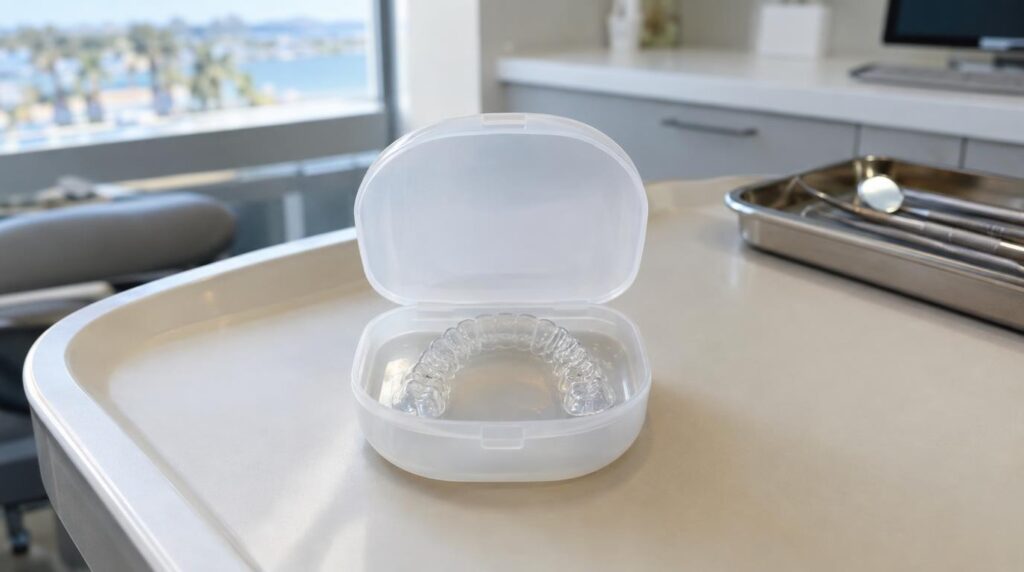
Clear aligner therapy uses a series of custom plastic trays designed specifically for each patient using advanced imaging technology. Patients wear each tray for approximately one to two weeks before switching to the next in the series. The aligners apply targeted pressure to guide teeth gradually toward their planned positions. According to the Journal of Orthodontic Science review on clear aligner therapy, attachment devices such as power ridges or buttons may be used to enhance specific tooth movements and ensure proper retention of the aligner. Those considering this option can explore clear aligner options in San Diego.
What Does Orthodontic Science Say About Teeth Straightening?
Both braces and clear aligners harness the body’s natural ability to remodel bone tissue in response to sustained pressure. When orthodontic force is applied to a tooth, a cascade of biological events occurs that allows the tooth to move through bone while maintaining structural integrity. This process, known as bone remodeling, forms the scientific foundation for all orthodontic treatment. Research consistently demonstrates that the biological mechanism remains identical regardless of the delivery method used.

How Does Bone Respond to Gentle Pressure?
When pressure is applied to a tooth, the bone on one side compresses while the bone on the opposite side stretches. Specialized cells called osteoclasts break down bone tissue in the compressed area, while osteoblasts build new bone in the stretched area. This coordinated remodeling process allows teeth to migrate through the bone gradually. Research from orthodontic science confirms that consistent, gentle pressure produces predictable tooth movement, while excessive force can damage the periodontal structures and delay treatment progress.
What Role Does the Periodontal Ligament Play?
The periodontal ligament connects each tooth to the surrounding alveolar bone and serves as the key responder to orthodontic pressure. This connective tissue contains nerve endings and blood vessels that detect pressure changes when force is applied to a tooth. When the periodontal ligament senses pressure, it sends signals that trigger the bone remodeling process. Without this biological interface, neither braces nor aligners could move teeth effectively. The ligament also helps stabilize teeth in their new positions once treatment concludes. For a closer look at orthodontic braces before and after treatment, explore how results develop and remain stable over time.
Why Is the Treatment Pressure Identical for Both Methods?
The treatment pressure applied by braces and clear aligners is fundamentally identical because both methods must work within the same biological constraints. Orthodontic force must be gentle enough to avoid damaging the periodontal ligament and surrounding bone while still being sufficient to trigger the remodeling cascade. Whether this force originates from a metal bracket and wire or from a plastic aligner tray, the tooth responds through the same biological mechanism. Patients dealing with specific alignment issues like overbite or underbite concerns can benefit from understanding this scientific equivalence.
Dr. Daniel S. German, whose company orthobrain provides orthodontic technology solutions, emphasizes this point: “Teeth do not know whether the pressure is coming from a clear plastic aligner or from brackets and wires.” This perspective, supported by orthodontic research, reinforces that effectiveness depends on proper treatment planning and patient compliance rather than the delivery method chosen. For patients in San Diego and surrounding communities including Lemon Grove and La Mesa, this means both options can achieve comparable results when treatment is properly designed and executed.
Which Orthodontic Issues Can Braces and Aligners Both Fix?
Both braces and clear aligners can address the same range of orthodontic problems, including overbite, underbite, crossbite, open bite, crowding, and spacing issues. The key factor determining success is not the treatment method chosen but rather the severity of the case and the precision of the treatment planning. Patients seeking teeth straightening in San Diego can discuss which approach suits their specific needs during a consultation. For a closer look at whether Invisalign can fix an overbite, learn what adults can expect from treatment.
Can Both Treatments Fix Crowded Teeth?
Both approaches can resolve mild to moderate crowding by gradually expanding the dental arch or slenderizing certain teeth to create space. Severe crowding that requires tooth extraction may present additional challenges for clear aligner therapy, according to orthodontic research. Traditional braces often provide more direct control for significant rotational movements and large bodily shifts of teeth. Patients with moderate crowding typically find excellent results possible with either method when treated by an experienced provider.
Can Both Treatments Close Gaps Between Teeth?
Closing gaps between teeth is achievable with both braces and aligners, though the approach may differ slightly. Clear aligners excel at closing small to moderate spaces through sequential tray changes that apply controlled force. Traditional braces use archwire adjustments and elastic chain modules to pull teeth together. The choice between methods often depends on the location and size of the gaps, as well as patient preferences regarding aesthetics and lifestyle during treatment.
What Factors Determine Which Option Is Right for Me?
While both treatment methods deliver identical biological tooth movement, several practical factors help patients and their orthodontic providers decide between braces and clear aligners. Those exploring teeth straightening options should consider how each method aligns with their lifestyle, aesthetic preferences, and clinical requirements. Patients interested in orthodontic treatment can learn about comprehensive treatment approaches that may inform their decision.
How Do Lifestyle and Aesthetics Compare?
Clear aligners offer significant aesthetic advantages as the trays remain virtually invisible when worn. Patients can also remove them for eating, drinking, and oral hygiene, which many find more convenient than navigating food restrictions with traditional braces. Traditional braces, however, require no patient compliance for wear time since they are permanently affixed to the teeth. For patients concerned about the appearance of their teeth during treatment – particularly professionals in public-facing roles – clear aligners may provide important confidence benefits while still delivering identical clinical outcomes.
Which Option Handles Complex Cases Better?
Traditional braces generally provide more precise control for complex tooth movements, severe rotations, and significant skeletal issues. The direct bonding of brackets to teeth and the continuous archwire allow orthodontists to apply specific forces with high accuracy. Clear aligner technology has advanced significantly and can now address many complex cases, but certain movements may require additionalauxiliary devices or longer treatment times. For patients with severe misalignment requiring extractions or surgical intervention, traditional braces often represent the more predictable path to optimal results.
What Do Orthodontic Experts Say About Choosing Between Them?
Orthodontic professionals consistently emphasize that the biological mechanism underlying tooth movement remains the same regardless of the appliance used. Dr. Michael Durbin, President of the American Association of Orthodontists, has highlighted that both traditional braces and modern clear aligner systems represent validated approaches to orthodontic treatment. The choice between them should be based on individual patient circumstances, preferences, and clinical requirements rather than assumptions about effectiveness.
For patients exploring clear aligner options in San Diego, understanding this expert consensus provides valuable context. The decision ultimately comes down to matching the treatment delivery method to the patient’s lifestyle, aesthetic preferences, and clinical needs. Those who prioritize discretion may lean toward aligners, while patients seeking minimal compliance requirements or needing complex tooth movements may benefit more from traditional braces.
Is One Option More Effective Than the Other?
When examining effectiveness across comparable cases, orthodontic research and clinical experience demonstrate that braces and clear aligners achieve equivalent outcomes when properly planned and executed. The effectiveness of either approach depends primarily on accurate diagnosis, comprehensive treatment planning, patient compliance, and the expertise of the treating provider. Neither method holds a fundamental biological advantage over the other for tooth movement.
For San Diego area residents considering teeth straightening, this scientific parity opens the door to personal preference without compromising results. Patients can confidently choose the treatment delivery method that best fits their daily routine, professional image, and comfort preferences. Whether selecting treatment for an overbite, underbite, or general misalignment, the biological destination remains the same – healthy, properly aligned teeth that support long-term oral health.
Frequently Asked Questions
Do braces and clear aligners work the same way?
Yes, braces and clear aligners work the same way biologically. Both move teeth through gentle, sustained pressure that triggers bone remodeling. According to Dr. Daniel S. German, “Teeth do not know whether the pressure is coming from a clear plastic aligner or from brackets and wires.” The fundamental physics is identical – pressure causes teeth to shift into better positions over time.
How do clear aligners move teeth?
Clear aligners use a series of custom plastic trays designed using advanced imaging technology. Patients wear each tray for approximately one to two weeks before switching to the next in the series. The aligners apply targeted pressure to guide teeth gradually toward planned positions. Attachment devices such as power ridges or buttons may be used to enhance specific tooth movements and ensure proper retention.
How does bone respond to orthodontic pressure?
When pressure is applied to a tooth, the bone on one side compresses while the other side stretches. Specialized cells called osteoclasts break down bone tissue in the compressed area, while osteoblasts build new bone in the stretched area. This coordinated remodeling process allows teeth to migrate through bone gradually. Consistent, gentle pressure produces predictable tooth movement, while excessive force can damage periodontal structures.
What role does the periodontal ligament play in tooth movement?
The periodontal ligament connects each tooth to the surrounding alveolar bone and serves as the key responder to orthodontic pressure. This connective tissue contains nerve endings and blood vessels that detect pressure changes when force is applied. When the ligament senses pressure, it sends signals that trigger the bone remodeling process. Without this biological interface, neither braces nor aligners could move teeth effectively.
Which orthodontic issues can both braces and aligners fix?
Both braces and clear aligners can address the same range of orthodontic problems, including overbite, underbite, crossbite, open bite, crowding, and spacing issues. The key factor determining success is not the treatment method but the severity of the case and the precision of treatment planning. Patients with moderate cases typically achieve excellent results with either method.
Which option handles complex orthodontic cases better?
Traditional braces generally provide more precise control for complex tooth movements, severe rotations, and significant skeletal issues. The direct bonding of brackets to teeth and continuous archwire allow orthodontists to apply specific forces with high accuracy. Clear aligner technology has advanced significantly, but certain movements may require additional auxiliary devices or longer treatment times for severe cases.
Are braces or clear aligners more effective?
When examining effectiveness across comparable cases, braces and clear aligners achieve equivalent outcomes when properly planned and executed. The effectiveness depends primarily on accurate diagnosis, comprehensive treatment planning, patient compliance, and provider expertise. Neither method holds a fundamental biological advantage over the other for tooth movement.