Post Root Canal Recovery: Your First Week and Warning Signs
October 28, 2026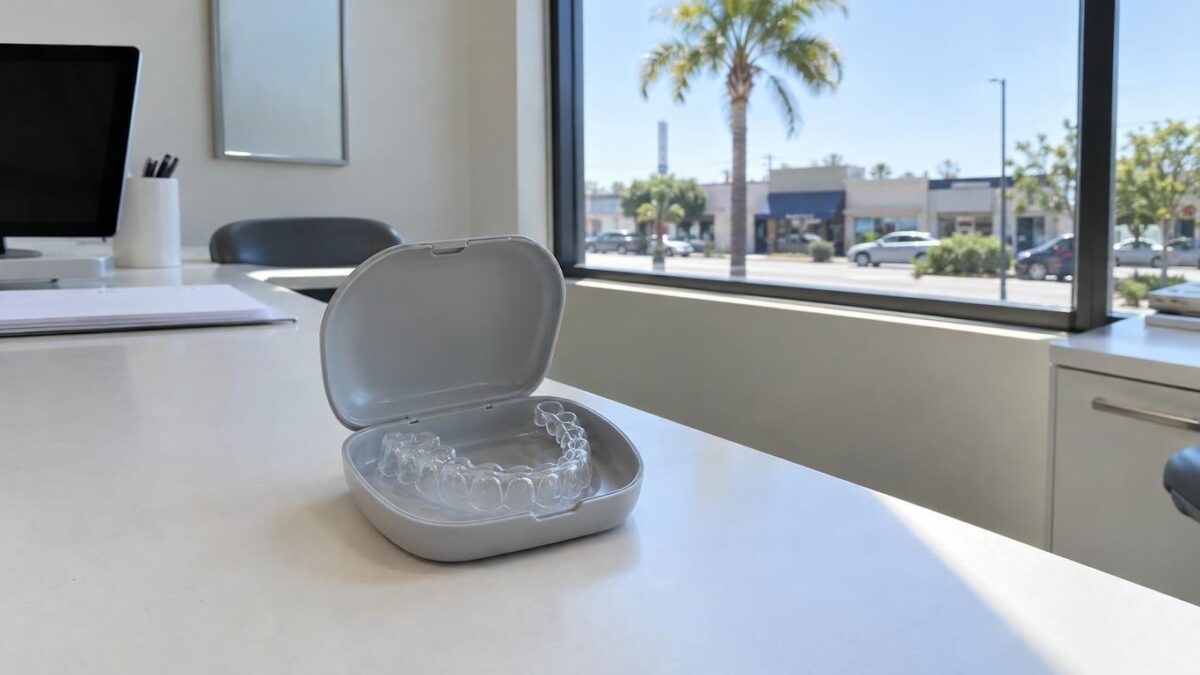
Last updated: October 31, 2026
Orthodontic braces before and after photos can show how tooth alignment and the bite changed by the end of treatment. They cannot show whether those changes will last. To understand a result, look beyond the finished smile to the treatment plan and what happens after treatment.
What do orthodontic braces before and after photos actually show?
Paired braces photos can show visible changes in tooth position and, when the images include a comparable bite view, how the upper and lower teeth meet. Photos cannot establish a diagnosis or identify every treatment used.
Compare images taken from similar angles, with similar lighting and facial expression. Notice whether the teeth are together in both images: a smiling portrait and a close-up of the bite answer different questions. At Bajars & Bajars Dental, our teeth-straightening service begins with an evaluation of the teeth, bite, and overall oral health rather than a judgment based on appearance alone.
Which changes should you look for in braces before-and-after photos?
Look for changes in spacing and alignment, then compare how the upper and lower teeth meet in similar bite views. Clearer photographs make those visible differences easier to judge, but a photo cannot confirm that chewing function improved or that a bite concern was fully corrected. Those questions require a clinical assessment.
How can you tell whether crowding or gaps improved?
Check whether overlapping teeth appear more evenly positioned and whether visible gaps have narrowed. Compare the same teeth in both images; a different camera angle can make a space look larger or smaller. For teeth straightening before and after comparisons, a close view of the teeth usually tells you more about crowding than a distant smile portrait.
What can photos reveal about an overbite, underbite, crossbite, or open bite?
In comparable bite views, an overbite may look improved when the upper front teeth have less excessive vertical overlap with the lower front teeth. With an underbite, the lower front teeth may no longer sit ahead of the upper front teeth. With a crossbite, affected upper teeth may no longer sit inside the lower teeth; with an open bite, teeth that previously failed to meet may make contact when the patient bites down. A photo cannot confirm that any bite problem has been clinically corrected. The American Dental Association’s guidance on braces explains that teeth may look straight even when the upper and lower jaws do not meet properly. Our guide to overbites and underbites provides more background on those distinct bite patterns.
How do braces and clear aligners differ for your smile goals?
Fixed braces use brackets and wires, while removable clear aligners use a planned series of trays to move teeth. Either approach requires a plan suited to the patient’s alignment and bite. We offer Invisalign and ClearCorrect clear aligners; for more complex alignment or bite issues, we may recommend traditional or advanced orthodontic techniques.

Because aligners are removable, the plan depends on wearing them as directed. Braces remain attached to the teeth while their wires are adjusted. The Cleveland Clinic’s orthodontics overview explains how both approaches gradually move teeth. A finished-result photo does not reveal which approach is appropriate for someone else’s bite. Our braces-versus-aligners comparison explores the practical differences.
When do teeth-straightening results appear, and what happens during treatment?
Teeth-straightening results develop gradually, and the time needed depends on the movement planned for an individual patient. Someone else’s after photo cannot predict your timeline.
Our process follows a sequence:
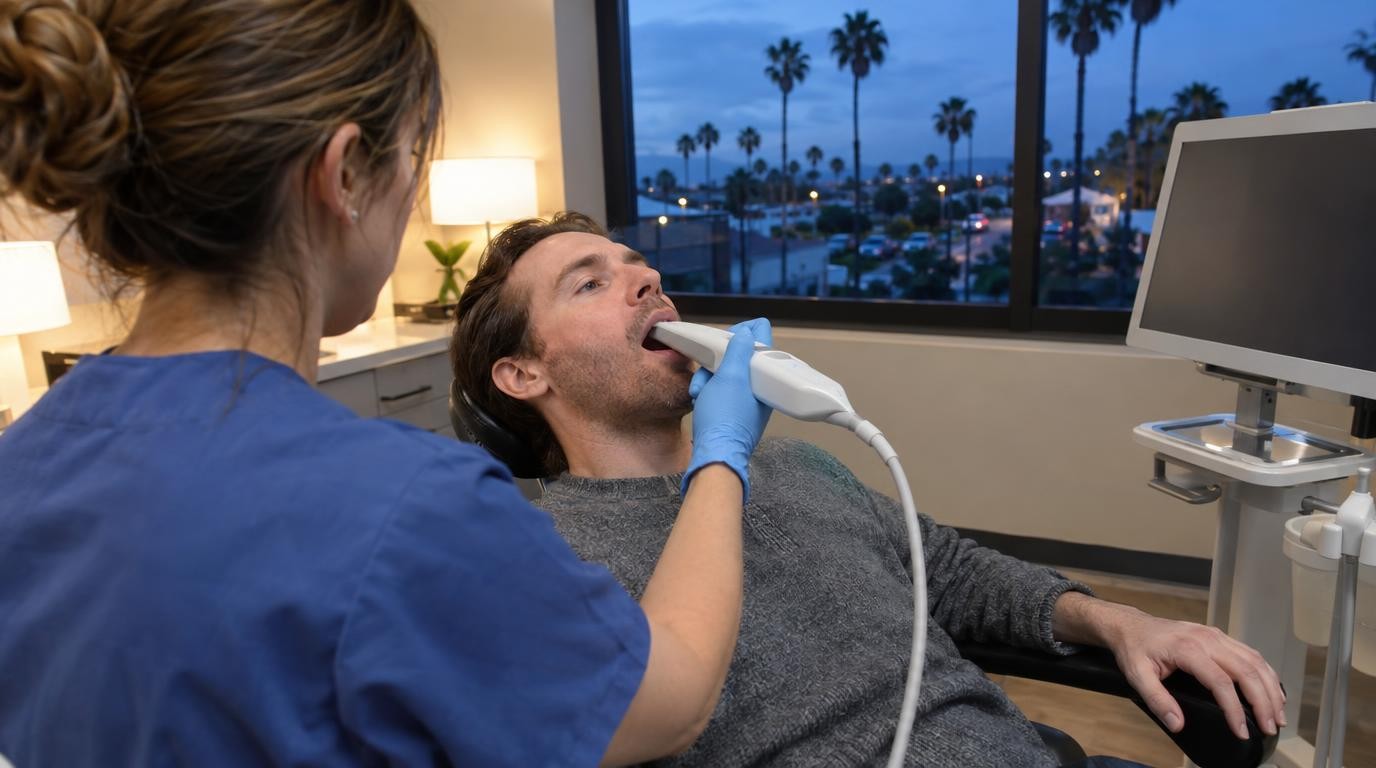
- Evaluation and digital imaging: We examine alignment, bite, and oral health to identify what treatment needs to address.
- Personalized planning: The plan connects the desired changes with a suitable treatment approach.
- Gradual movement and check-ins: Teeth move over time while progress is monitored and the plan is reviewed as needed.
The U.S. Food and Drug Administration’s guidance on braces and clear aligners gives the following general time frames. They are not estimates for an individual Bajars & Bajars Dental patient.
| FDA treatment category | Time frame in FDA guidance | What affects timing |
|---|---|---|
| Braces | An average treatment period of two years | The amount of correction needed may make treatment shorter or longer. |
| Clear aligners | Total treatment may take six to 18 months | Suitability and the personal treatment plan determine what applies. |
These figures do not show that aligners correct the same problem faster than braces. The FDA says there is no generally “faster” way to straighten teeth; treatment choice and duration depend on the correction you need.
What happens after braces come off, and how long can results last?
After active orthodontic treatment, a retention plan helps maintain the new tooth positions. Teeth can shift with healing and aging, so long-term outcomes vary.
Why does the retainer plan matter to the after photo?
The photo shows the finish of active treatment; retention addresses what happens afterward. A fixed retainer stays attached to the teeth, while a removable retainer can be taken out for cleaning and is worn according to an individual schedule. Retainers after braces are therefore part of evaluating braces results, even though they may not appear in the photograph.
In a four-year follow-up study of fixed and removable retainers, 42 patients returned, 21 in each group. The researchers note that long-term or even indefinite retention is routinely prescribed. Fixed retention preserved the alignment of the lower front teeth over time, while both groups reported gum discomfort and higher plaque scores. The study did not establish one wear schedule for everyone.
What does long-term research say about stability?
A 2023 Journal of Clinical Medicine retrospective study of difficult orthodontic cases compared measurements before treatment, at treatment completion, and at a later recall. The researchers used Peer Assessment Rating scores to measure the severity of tooth and bite misalignment. The findings show why a result measured at treatment’s end and a result measured years later are different questions.
| Source | Reported finding | How to interpret it |
|---|---|---|
| 2023 Journal of Clinical Medicine retrospective study | 85 patients attended recall; mean post-treatment follow-up was 9.4 years, plus or minus 2.4 years. | The follow-up describes this selected group, not every orthodontic patient. |
| 2023 Journal of Clinical Medicine retrospective study | Peer Assessment Rating scores improved by 96.1% at treatment completion, with improvement remaining at 77.5% at recall. | Improvement remained in the group, but the measured result changed over time. |
In this selected group, having a lower fixed retainer in place at recall and having little lower-front-tooth irregularity at treatment completion were associated with better stability. These associations do not predict an individual’s outcome or mean that everyone needs a fixed retainer or the same wear schedule.
Can braces change your face shape as well as your teeth?
Changes in tooth position and bite can affect how a smile or profile appears, but facial photos cannot reliably isolate the effect of orthodontic treatment. Growth, expression, lighting, and camera angle can also change the image. Another patient’s facial comparison is not a dependable forecast of how your own face will look.
What risks or limitations should you discuss before teeth straightening?
Clear aligners do not suit every bite problem. Discuss your oral health, treatment options, and individual risks with your own clinician.
The Cleveland Clinic’s braces guidance describes discomfort for a few days after braces are fitted and notes that some people also feel tenderness after routine tightening. Plaque around brackets and wires can lead to cavities and gingivitis. If you have braces, brush and floss carefully around brackets and wires, and follow your dental team’s hygiene and checkup instructions. Its guidance on clear braces explains that extensive decay, gum disease, or gum recession may need treatment before braces are attached. The FDA cautions that moving teeth too rapidly can lead to tooth loss or breakdown of the supporting bone. If an appliance breaks or injures your mouth, contact the treating dental team; seek urgent care if swelling makes breathing or swallowing difficult.
Frequently Asked Questions
Can adults get braces if they never had them as kids?
Yes. Healthy teeth can be treated orthodontically at any age, according to the American Dental Association.
At what age should a child start orthodontic treatment?
There is no single starting age for every child. The American Dental Association says abnormal bites usually become noticeable between ages 6 and 12, and treatment often begins between ages 8 and 14. Treatment while a child is growing can help, but an examination determines whether and when care is appropriate.
Can early braces treatment for a Class II bite hold up over time?
Early treatment may produce lasting improvement, but an individual result is not guaranteed. The 2024 Journal of Pharmacy & Bioallied Sciences retrospective study “The Effect of Early Orthodontic Treatment on Long-Term Stability of Class II Malocclusions” reviewed records from 150 patients and reported a mean overjet reduction of 3.2 millimeters and correction of the Class II molar relationship in 80% of cases, with a five-year follow-up. Those findings do not predict every child’s outcome.
Are clear ceramic braces as effective as metal braces?
Yes, clear ceramic braces can be as effective as traditional metal braces, according to Cleveland Clinic. They use different materials and may take longer to straighten teeth. Clear ceramic braces are fixed appliances, not removable clear aligners. The right option depends on your teeth, bite, and treatment plan.
How long will my teeth feel sore after braces are put on?
Tenderness commonly lasts a few days after braces are first fitted, and it can return after routine tightening. Cleveland Clinic notes that braces generally should not hurt. If pain is persistent or an appliance injures your mouth, contact your treating dental team rather than assuming the discomfort is normal.
How often do you change clear aligner trays?
Clear aligner trays are generally changed every one to two weeks, according to the FDA. Each custom-made tray is part of a planned series that moves teeth gradually. We offer Invisalign and ClearCorrect, with the tray-change schedule set in each personalized treatment plan.
Why can teeth move again years after braces?
Teeth can shift throughout life because everyday forces, including chewing, and changes in the jaw gradually move them as you age, according to the FDA. Retainers help maintain a finished orthodontic result, but teeth can still move over time.
What should you ask at a teeth-straightening consultation?
At Bajars & Bajars Dental in San Diego, the following questions can help connect a photo-inspired goal to a plan based on your own oral health and treatment needs.
- What do my examination and digital images show about crowding, gaps, and the way my teeth meet?
- Am I a candidate for Invisalign or ClearCorrect, or should I discuss another orthodontic approach?
- How will you check progress, and what retainer plan will apply after active treatment?
In some cases, a bite splint may be considered to help manage grinding or excessive pressure. A bite splint serves a different purpose from a retainer and should not be treated as a substitute for the retention plan.
If you are considering treatment and live in San Diego or come from Coronado, contact Bajars & Bajars Dental for a personalized teeth-straightening consultation. We can help you understand what changes are realistic for your alignment and bite, and what maintaining those results may involve.
This information is general and is not medical advice. Talk to a licensed clinician about your own situation before making a treatment decision.